

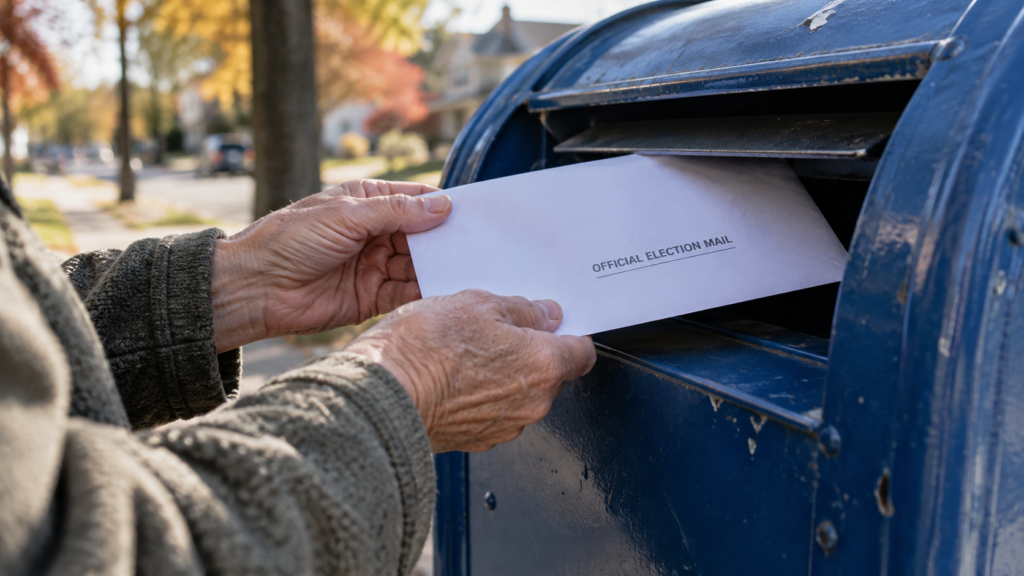
The question many voters are asking is simple: Can I still vote by mail in the 2026 midterm elections? Yes, if you qualify under your state’s rules. The Supreme Court’s September 14 decision keeps key parts of a new U.S. Postal Service rule blocked, allowing existing mail voting systems to continue for the November 3 election. After reviewing the September 22 American Community Media briefing, my biggest takeaway is that voters need clear information and a plan, especially when political headlines make an ordinary election process feel uncertain.
Why This Mail-In Voting Decision Matters
The briefing, held in collaboration with Asian Americans Advancing Justice | AAJC and moderated by Sunita Sohrabji, brought together four attorneys involved in protecting mail voting: Niyati Shah, John Cusick, Justin Lam, and Ethan Herenstein. Their message connected the courtroom fight to people trying to participate in democracy while managing jobs, disabilities, family responsibilities, distance, or military service.
For me, that connection matters. Picture a caregiver who cannot leave a parent alone, a college student studying away from home, or an older voter who needs help reading ballot instructions. These are everyday situations that explain why mail voting can be essential. A sudden change in how ballots are prepared or delivered can create a barrier long before anyone reaches a polling place.
Niyati Shah Explains Who Could Be Left Behind
Niyati Shah, senior director of litigation at Advancing Justice | AAJC, described the ruling as especially important for voters who need additional time or assistance. Her work includes voting rights, immigration, education equity, and challenges to racial profiling. That experience helped frame the discussion around communities whose access to the ballot can depend on language assistance and reliable information.
Shah emphasized the confusion and fear the proposed changes had created. She also discussed why voting at home can help eligible voters in mixed-status families feel more comfortable participating. I heard a reminder that protecting voting rights includes making sure people understand their options. A right becomes harder to exercise when families are unsure whether familiar procedures still apply.
John Cusick Details the Practical Problems
John Cusick, assistant counsel at the Legal Defense Fund and an adjunct clinical law professor at New York University, explained what election administrators would have faced. His background includes challenges to voter registration restrictions, limited early voting, discriminatory voter challenges, and electoral maps.
The proposed postal rule required approved envelope designs, voter-specific barcodes, and personal voter information uploaded to a federal portal. Cusick described election offices that had already designed, ordered, and printed envelopes. Replacing those materials close to Election Day would take time and money. He also noted concerns about an unfinished portal and the lack of training. What stood out to me was how a technical requirement could prevent an otherwise eligible person from receiving a ballot.
Ethan Herenstein Clarifies What the Court Decided
Ethan Herenstein, a staff attorney with the ACLU Voting Rights Project, explained the legal challenge. His experience includes voting rights work at the Brennan Center and federal judicial clerkships. He outlined the coalition’s arguments that the president lacked authority to override state election administration and that Congress had not authorized the Postal Service to reject otherwise valid election mail under these new requirements.
The Supreme Court denied the government’s request to lift the preliminary injunction. This protects the upcoming election, but the litigation continues. Justice Brett Kavanaugh separately emphasized insufficient implementation time, while Justices Samuel Alito and Clarence Thomas dissented. I would not describe this as a permanent resolution of every legal question. The immediate result is that the disputed requirements remain blocked for the midterms. Herenstein cited a 93-year-old voter who depends on mail. Supreme Court order.
Justin Lam Urges Voters to Make a Plan
Justin Lam, counsel in the Brennan Center’s Voting Rights and Elections Program, focused on confidence and preparation. A former fifth-grade teacher with law and public policy degrees, Lam brought the discussion back to practical choices. He encouraged voters to use the voting method that serves them best and to vote early when possible.
That advice is timely. Pennsylvania’s current guidance requires mail ballot applications to arrive by 5 p.m. October 27 and completed ballots by 8 p.m. November 3. An Election Day postmark alone is insufficient. Massachusetts also sets an October 27 application deadline and recommends applying earlier. These real deadlines show why a favorable court decision still needs to be followed by action.
What Should Mail-In Voters Do Now?
My advice is to confirm your registration and current address, then check your state or local election office’s instructions. Eligibility, application deadlines, return deadlines, and available drop-off options vary. Read the ballot materials carefully and allow time for delivery. If tracking is available, use it to follow your ballot’s progress. USAGov voting guidance.
The briefing left me thinking about how much work happens behind a single envelope. Attorneys, community organizations, election workers, and postal employees all help make participation possible. This ruling gives voters breathing room. Using that opportunity means getting accurate information, preparing early, and making sure our voices are heard this November.
Fallo de la Corte Suprema sobre el voto por correo: qué significa para las elecciones de 2026
Muchos votantes se hacen una pregunta sencilla: ¿Todavía puedo votar por correo en las elecciones de mitad de mandato de 2026? Sí, si cumples con los requisitos de tu estado. La decisión de la Corte Suprema del 14 de septiembre mantiene bloqueadas partes clave de una nueva norma del Servicio Postal de Estados Unidos y permite que los sistemas actuales de voto por correo continúen funcionando para las elecciones del 3 de noviembre.
Después de revisar la sesión informativa de American Community Media del 22 de septiembre, me quedó claro que los votantes necesitan información confiable y un plan. Esto resulta especialmente necesario cuando los titulares políticos generan dudas sobre un proceso electoral conocido.
Por qué importa esta decisión sobre el voto por correo
La sesión, organizada en colaboración con Asian Americans Advancing Justice | AAJC y moderada por Sunita Sohrabji, reunió a cuatro abogados involucrados en la defensa del voto por correo: Niyati Shah, John Cusick, Justin Lam y Ethan Herenstein. Sus intervenciones conectaron la batalla judicial con las necesidades de quienes intentan votar mientras enfrentan responsabilidades laborales, discapacidades, obligaciones familiares, distancias largas o servicio militar.
Para mí, esa conexión importa. Pensemos en alguien que cuida a un familiar y no puede dejarlo solo, en un estudiante que vive lejos de casa o en una persona mayor que necesita ayuda para leer las instrucciones de su boleta. Son situaciones cotidianas que explican por qué votar por correo puede ser esencial. Un cambio repentino en la preparación o entrega de las boletas puede convertirse en una barrera antes de llegar a un centro de votación.
Niyati Shah explica quiénes podrían quedar fuera
Niyati Shah, directora sénior de litigios de Advancing Justice | AAJC, explicó que el fallo beneficia especialmente a quienes necesitan más tiempo o asistencia para votar. Su trayectoria incluye derechos electorales, inmigración, equidad educativa y casos contra la discriminación racial.
Shah destacó la confusión y el temor que habían provocado los cambios propuestos. También explicó por qué votar desde casa puede facilitar la participación de ciudadanos elegibles que viven en familias con distintos estatus migratorios. Su intervención me recordó que defender el derecho al voto también significa ayudar a las personas a entender sus opciones. Ese derecho se vuelve más difícil de ejercer cuando las familias no saben si los procedimientos habituales siguen vigentes.
John Cusick detalla los problemas prácticos
John Cusick, abogado del Legal Defense Fund y profesor adjunto de derecho clínico en la Universidad de Nueva York, describió los obstáculos que habrían enfrentado los administradores electorales. Su experiencia incluye casos sobre restricciones al registro de votantes, límites a la votación anticipada, impugnaciones discriminatorias y mapas electorales.
La norma postal propuesta exigía diseños de sobres aprobados, códigos de barras individuales y la carga de información personal de los votantes en un portal federal. Cusick explicó que muchas oficinas electorales ya habían diseñado, encargado e impreso sus sobres. Reemplazarlos cerca de las elecciones habría requerido tiempo y dinero. También señaló preocupaciones sobre un portal sin terminar y la falta de capacitación. Lo que más me llamó la atención fue cómo un requisito técnico podía impedir que una persona elegible recibiera su boleta.
Ethan Herenstein aclara qué decidió la Corte
Ethan Herenstein, abogado del Proyecto de Derechos Electorales de la ACLU, explicó los argumentos de la demanda. Su trayectoria incluye trabajo electoral en el Brennan Center y experiencia como asistente jurídico en tribunales federales.
Herenstein detalló la posición de la coalición: el presidente carecía de autoridad para sustituir las decisiones estatales sobre la administración electoral, y el Congreso no había autorizado al Servicio Postal a rechazar correspondencia electoral válida bajo estos nuevos requisitos.
La Corte Suprema rechazó la solicitud del gobierno de suspender la medida cautelar. Esto protege las próximas elecciones, aunque el litigio continúa. El juez Brett Kavanaugh destacó por separado la falta de tiempo para implementar los cambios. Los jueces Samuel Alito y Clarence Thomas expresaron su desacuerdo. Yo no presentaría esta decisión como una resolución definitiva de todas las cuestiones legales. Por ahora, los requisitos impugnados siguen bloqueados para estas elecciones. Herenstein también mencionó a un votante de 93 años que depende del voto por correo. Orden de la Corte Suprema.
Justin Lam recomienda preparar un plan para votar
Justin Lam, abogado del Programa de Derechos Electorales y Elecciones del Brennan Center, centró su intervención en la confianza y la preparación. Antes de su carrera jurídica, trabajó como maestro de quinto grado. Su mensaje fue práctico: elegir el método de votación que mejor responda a nuestras necesidades y votar temprano cuando sea posible.
Ese consejo llega en un momento oportuno. Según las instrucciones oficiales de Pensilvania, las solicitudes de boletas por correo deben recibirse antes de las 5 p. m. del 27 de octubre. Las boletas completadas deben llegar antes de las 8 p. m. del 3 de noviembre. Un matasellos del día de las elecciones no basta. Massachusetts también fija el 27 de octubre como fecha límite para recibir solicitudes y recomienda solicitarlas antes.
Qué deben hacer ahora los votantes por correo
Mi recomendación es confirmar el registro electoral y la dirección actual, y consultar las instrucciones de la oficina electoral estatal o local. Los requisitos, las fechas límite y las opciones para entregar boletas varían. Conviene leer los materiales cuidadosamente, dejar tiempo para el envío y utilizar el seguimiento de boletas cuando esté disponible. Información electoral de USAGov.
Esta sesión me hizo pensar en todo el trabajo que hay detrás de un solo sobre. Abogados, organizaciones comunitarias, trabajadores electorales y empleados postales contribuyen a que podamos participar. El fallo ofrece tranquilidad. Aprovechar esa oportunidad significa informarnos, prepararnos temprano y hacer escuchar nuestra voz en noviembre.
About The Author

More Stories
2026 Midterm Voting Barriers: What Ethnic Communities Need to Know
Rural Health Care Crisis 2026 Why Affordable Coverage Matters
Immigration Surveillance Dragnet Raises Privacy Concerns Beyond ICE