

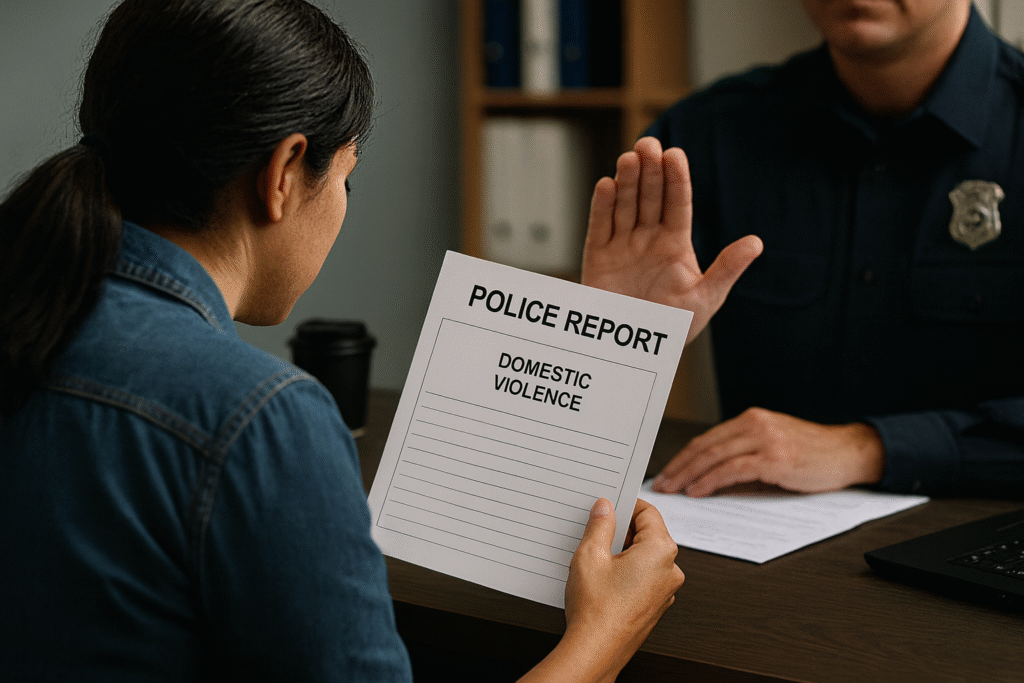
Advocates warn of growing fear, legal setbacks, and funding cuts that are silencing survivors
Immigrant survivors of domestic violence are encountering new and growing obstacles to safety and justice. As legal protections weaken, funding for critical services declines, and fear of immigration enforcement spreads through communities, many survivors are being forced into silence. Advocates across the country warn that the result is a humanitarian and public safety crisis.
At a national media briefing hosted by ACOM, leaders from organizations serving immigrant survivors spoke about the impact of these changes. Carmen McDonald, Executive Director of the Survivor Justice Center, described the immediate chilling effect that recent immigration enforcement actions have had on survivors’ willingness to come forward.
“About 70 percent of our clients are immigrants. Los Angeles is home to one of the largest immigrant communities in the nation, and when the raids began, the fear they generated spread. Spread far beyond folks that were targeted. And that spread to survivors and silenced survivors. The impact is that it keeps people away from the help they need,” McDonald said.
She explained that survivors are now avoiding court appearances, medical appointments, and even everyday tasks out of fear of being detained. “Clients aren’t reporting wage theft. They’re staying silent about crimes. There are other crimes they’re experiencing, and the silence is not safety, it’s danger,” she said. “Our staff is completely overwhelmed by the need, and our communities are in fear. Our clients are calling us more than ever, telling us they’re afraid. They might have seen ICE in their neighborhood, and they’re panicked.”
Legal protections under strain
For decades, programs such as the Violence Against Women Act (VAWA) and U visas have provided pathways to legal status for survivors of domestic violence and other serious crimes. These protections allow victims to apply independently of their abusers, a critical step toward safety. Morgan Weibel, Director of Client Advocacy and Legal Services at the Tahirih Justice Center, explained that recent policy shifts have eroded these protections.
“More than ever before, survivors are less likely to trust the system because of the government’s policies that entangle local law enforcement with federal immigration actions,” Weibel said. “The climate of fear for survivors who are witnessing arrests at courthouses and other previously protected areas is real.”
She explained that the administration has added interviews to VAWA application processes and eliminated previous guidance that exempted survivors from enforcement actions. “Now, a VAWA applicant, and even someone with an approved VAWA application, can be detained and deported,” she said. “The stakes are much, much higher, and unfortunately, what we are seeing is that some survivors are just not willing to take those risks.”
Weibel also raised concerns about asylum protections. A recent decision by the Attorney General reversed years of progress recognizing domestic violence as grounds for asylum. “Perhaps most concerning is that this provides a justification to immigration judges who were already inclined to reject asylum claims of survivors to do so without fair consideration of each individual case,” she said. “And the reality is the most determinative factor in a survivor’s chance at success may now be based on the location in which they file their application for asylum. Because so much is going to be left to the federal circuit courts, whose treatment of domestic violence asylum claims varies so widely across the country.”
Funding cuts and fear compound the crisis
Organizations that provide critical services are facing new restrictions on federal grants, which further strain their ability to meet the needs of survivors. Patima Komolamit, Executive Director of the Center for the Pacific Asian Family, described how this affects their work.
“Oftentimes, what we see with our API, Asian Pacific Islander clients, is that immigration has always been used as part of the dynamics of domestic violence. There is coercive control, there is a threat of deportation, and that has typically been within that person who is in their intimate partner, who is the person who is in their space at all times. And now what we see is we see that it is actually ensconced in our government, right, and really threatening survivors,” Komolamit said.
Her organization provides multilingual hotlines, emergency shelters, transitional housing, and community outreach programs, all designed to meet the specific cultural and linguistic needs of immigrant survivors. Funding cuts and restrictive policies, she explained, make it harder to provide the kind of tailored support that helps survivors feel safe seeking help.
A survivor’s story
The briefing also featured testimony from Juana Padilla, who shared her journey of escaping abuse, facing years of uncertainty, and ultimately securing legal status through VAWA. Her story reflected both the immense challenges survivors face and the life-changing impact of legal advocacy.
“I was really lucky to find this legal center that they give me the tools and advice and help that I need to get my status,” Padilla said. “It takes me like five years, but during the process, they were really nice with me, they were supporting, they were always answering all my questions. I was afraid to ask, to even say it, you know, that I was abused. And it’s hard, it’s hard sometimes to go forward, and especially when your husband is an ex-military and they put in your head, you know, you have no one. And you have no one.”
She explained that after years of fear, legal support allowed her to stabilize her family’s future. “I barely got my resident card, my little one got the resident card. And with all this Trump administration that is going crazy, I was afraid too that they’re gonna get me in, they’re gonna send me back, and my little one is not gonna get treatment. But thanks God, we got it,” she said.
A public safety crisis
Advocates stressed that these developments affect not only individual survivors but also entire communities. “This is not just a humanitarian crisis, it’s a public safety crisis,” McDonald said. “When survivors are silenced, abusers go free. When immigrants are too afraid to call the police, everyone is less safe.”
Speakers called on communities, journalists, and policymakers to ensure survivors know their rights, can access legal help, and feel safe seeking protection. McDonald emphasized the urgency: “We’ve worked so hard for so many years to educate survivors of their rights, that they don’t have to worry about being detained for speaking out about abuse. But they’re worried again.”
Sobrevivientes Inmigrantes Enfrentan Obstáculos Crecientes para su Seguridad y Justicia
Defensores alertan sobre el aumento del miedo, los retrocesos legales y los recortes de fondos que están silenciando a las víctimas
Las personas inmigrantes que sobreviven a la violencia doméstica enfrentan obstáculos cada vez mayores para lograr seguridad y justicia. A medida que se debilitan las protecciones legales, disminuye el financiamiento para servicios esenciales y crece el temor a las autoridades migratorias, muchas víctimas se ven obligadas a guardar silencio. Defensores en todo el país advierten que esto está creando una crisis humanitaria y de seguridad pública.
En una conferencia nacional para medios, líderes de organizaciones que apoyan a sobrevivientes inmigrantes hablaron sobre el impacto de estos cambios. Carmen McDonald, directora ejecutiva del Survivor Justice Center, describió el fuerte efecto paralizante que las recientes acciones migratorias han tenido en la disposición de las víctimas a denunciar.
“El setenta por ciento de nuestros clientes son inmigrantes. Los Ángeles alberga a una de las comunidades inmigrantes más grandes del país, y cuando comenzaron las redadas, el miedo que generaron se extendió. Se extendió mucho más allá de las personas que eran objetivo. Y ese miedo alcanzó a los sobrevivientes y los silenció. El impacto es que mantiene a la gente alejada de la ayuda que necesita”, dijo McDonald.
Explicó que muchas víctimas están evitando ir a los tribunales, asistir a citas médicas o realizar tareas cotidianas por miedo a ser detenidas. “Los clientes no están denunciando el robo de salarios. Están guardando silencio sobre delitos. Hay otros delitos que están experimentando, y el silencio no es seguridad, es peligro”, afirmó. “Nuestro personal está completamente abrumado por la necesidad, y nuestras comunidades están con miedo. Nuestros clientes nos llaman más que nunca, diciéndonos que tienen miedo. Tal vez vieron a ICE en su vecindario, y están en pánico”.
Las protecciones legales están bajo presión
Durante décadas, programas como la Ley de Violencia contra la Mujer (VAWA) y las visas U han ofrecido a las sobrevivientes de violencia doméstica y otros delitos graves un camino hacia la regularización migratoria. Estas protecciones les permiten presentar solicitudes de manera independiente a sus abusadores, un paso crucial para su seguridad. Morgan Weibel, directora de defensa legal en el Tahirih Justice Center, explicó que los recientes cambios de política han debilitado estas protecciones.
“Más que nunca, las sobrevivientes desconfían del sistema debido a las políticas del gobierno que enredan a las agencias locales con las acciones migratorias federales”, dijo Weibel. “El clima de miedo para quienes ven arrestos en tribunales y en otros espacios previamente protegidos es real”.
Explicó que ahora se exigen entrevistas adicionales en el proceso de solicitud de VAWA y que se eliminaron protecciones que antes impedían que las víctimas fueran blanco de acciones migratorias. “Ahora, una persona que solicita VAWA, e incluso alguien con una petición aprobada, puede ser detenida y deportada”, dijo. “Los riesgos son mucho, mucho mayores, y lamentablemente, lo que estamos viendo es que algunas víctimas simplemente no están dispuestas a asumir esos riesgos”.
Weibel también advirtió sobre los cambios en el sistema de asilo. Una reciente decisión de la Fiscal General revirtió avances logrados en décadas para reconocer la violencia doméstica como motivo de asilo. “Lo más preocupante es que esto brinda una justificación a los jueces de inmigración que ya estaban inclinados a rechazar las solicitudes de asilo de sobrevivientes para hacerlo sin considerar de manera justa cada caso individual”, dijo. “Y la realidad es que el factor más determinante en las posibilidades de éxito de una persona puede depender ahora de la ubicación en la que presente su solicitud. Porque gran parte quedará en manos de los tribunales federales de circuito, cuya interpretación de estos casos varía mucho en todo el país”.
Los recortes de fondos y el miedo agravan la crisis
Las organizaciones que brindan servicios esenciales enfrentan nuevas restricciones en los fondos federales. Patima Komolamit, directora ejecutiva del Center for the Pacific Asian Family, explicó cómo esto afecta a su comunidad.
“A menudo, lo que vemos con nuestras clientas API, mujeres de las comunidades asiáticas e isleñas del Pacífico, es que la inmigración siempre se ha utilizado como parte de la dinámica de la violencia doméstica. Hay control coercitivo, hay amenaza de deportación, y eso normalmente proviene de la pareja íntima, la persona que está siempre en su espacio. Y ahora lo que vemos es que esto está institucionalizado en nuestro propio gobierno y representa una amenaza real para las sobrevivientes”, dijo Komolamit.
Su organización brinda líneas directas en varios idiomas, refugios de emergencia, viviendas de transición y programas comunitarios diseñados para atender las necesidades culturales y lingüísticas de las víctimas inmigrantes. Los recortes presupuestarios y las políticas restrictivas dificultan cada vez más ofrecer el apoyo especializado que estas mujeres necesitan para sentirse seguras al pedir ayuda.
La historia de una sobreviviente
La sesión también incluyó el testimonio de Juana Padilla, quien compartió su historia de cómo escapó del abuso, enfrentó años de incertidumbre y finalmente obtuvo su estatus legal a través de VAWA.
“Tuve mucha suerte de encontrar este centro legal que me dio las herramientas, los consejos y la ayuda que necesitaba para obtener mi estatus”, dijo Padilla. “Me tomó como cinco años, pero durante el proceso fueron muy amables conmigo, me apoyaron, siempre respondían todas mis preguntas. Tenía miedo de preguntar, incluso de decir que había sido abusada. Es difícil avanzar, especialmente cuando tu esposo es exmilitar y te mete en la cabeza que no tienes a nadie. Que no tienes a nadie.”
Explicó cómo obtener la residencia cambió su vida. “Apenas recibí mi tarjeta de residente, mi pequeña también la recibió. Y con toda esta administración de Trump que está loca, tenía miedo de que me agarraran, que me mandaran de regreso y que mi niña no recibiera tratamiento. Pero gracias a Dios, lo logramos”, dijo.
Una crisis de seguridad pública
Los defensores enfatizaron que estos problemas no solo afectan a las víctimas individuales, sino a comunidades enteras. “Esto no es solo una crisis humanitaria, es una crisis de seguridad pública”, dijo McDonald. “Cuando las víctimas son silenciadas, los abusadores quedan en libertad. Cuando los inmigrantes tienen demasiado miedo para llamar a la policía, todos estamos menos seguros.”
Los ponentes hicieron un llamado a comunidades, periodistas y autoridades para garantizar que las sobrevivientes conozcan sus derechos, tengan acceso a asistencia legal y se sientan seguras al buscar protección. McDonald subrayó la urgencia de actuar: “Hemos trabajado tanto durante tantos años para educar a las sobrevivientes sobre sus derechos, para que no tengan que preocuparse por ser detenidas al denunciar el abuso. Pero ahora vuelven a tener miedo.”
About The Author


More Stories
2026 Midterm Voting Barriers: What Ethnic Communities Need to Know
Supreme Court Mail-In Voting Ruling: What It Means for the 2026 Midterms
Rural Health Care Crisis 2026 Why Affordable Coverage Matters