

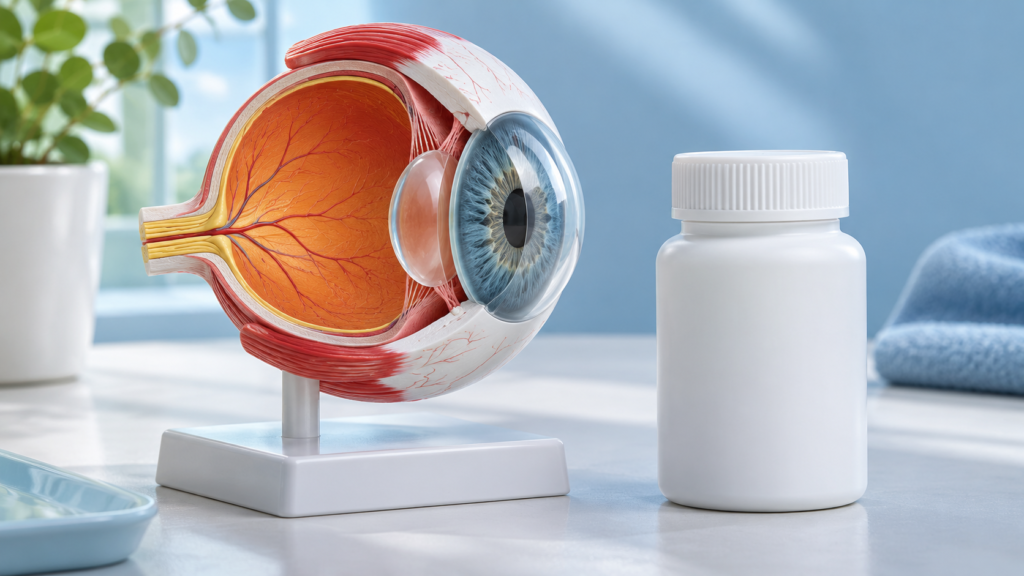
The Food and Drug Administration said November 9 that GLP-1 medicines must carry new warnings about a potential increased risk of nonarteritic anterior ischemic optic neuropathy, or NAION. The rare condition can cause permanent vision loss. Patients experiencing sudden, painless vision changes should contact a health professional immediately.
Why the optic nerve matters
The optic nerve carries visual information from the retina to the brain. Damage can affect sight in one or both eyes, according to MedlinePlus. Reduced blood flow is one possible cause, but optic nerve problems have several origins. An examination is needed to determine what is happening; a symptom alone does not establish a diagnosis.
Discuss treatment with a clinician
GLP-1 medicines have important treatment roles. MedlinePlus explains that semaglutide injection is used for type 2 diabetes and, in certain formulations and patients, weight management and other conditions. Patients should follow their prescribed instructions rather than independently changing treatment. The medication guide and a conversation with the prescriber or pharmacist can help clarify benefits, precautions and questions about other medicines or supplements.
Routine care still matters
The National Eye Institute recommends comprehensive dilated eye examinations, which can identify problems before symptoms become noticeable. Diabetes and high blood pressure can increase the risk of certain eye diseases. Sharing personal and family eye-health history helps clinicians assess ongoing care needs. Routine screening, however, is not a substitute for evaluation when vision suddenly changes. The warning is a reason to discuss an individual treatment plan, not to assume that every eye symptom has the same cause.
Editorial note: The featured visual is an AI-generated conceptual illustration, not a photograph of the reported event.
La FDA exige nuevas advertencias sobre riesgos oculares de medicamentos GLP-1
La Administración de Alimentos y Medicamentos anunció el 9 de noviembre que los medicamentos GLP-1 deberán incluir nuevas advertencias sobre un posible aumento del riesgo de neuropatía óptica isquémica anterior no arterítica, conocida como NAION. Esta afección poco frecuente puede causar pérdida permanente de visión. Quienes experimenten cambios visuales repentinos y sin dolor deben contactar de inmediato a un profesional de salud.
La importancia del nervio óptico
El nervio óptico transmite información visual de la retina al cerebro. Según MedlinePlus, su daño puede afectar la vista de uno o ambos ojos. La reducción del flujo sanguíneo es una posible causa, pero estos problemas tienen distintos orígenes. Una evaluación permite determinar qué ocurre; un síntoma por sí solo no establece un diagnóstico.
Consulte el tratamiento con un profesional
Los medicamentos GLP-1 cumplen funciones importantes. MedlinePlus explica que la semaglutida inyectable se utiliza para la diabetes tipo 2 y, según la formulación y el paciente, para controlar el peso y tratar otras afecciones. Los pacientes deben seguir las indicaciones prescritas, sin modificar el tratamiento por cuenta propia. La guía del medicamento y una conversación con el médico o farmacéutico ayudan a aclarar beneficios, precauciones y dudas sobre otros medicamentos o suplementos.
La atención habitual sigue siendo importante
El Instituto Nacional del Ojo recomienda exámenes completos con dilatación, capaces de detectar problemas antes de que aparezcan síntomas. La diabetes y la presión arterial alta pueden aumentar el riesgo de algunas enfermedades oculares. Informar sobre antecedentes personales y familiares ayuda a evaluar las necesidades de atención. Sin embargo, las revisiones habituales no sustituyen una evaluación cuando la visión cambia repentinamente. La advertencia invita a revisar el tratamiento individual, no a suponer que todo síntoma ocular tiene la misma causa.
Nota editorial: La imagen destacada es una ilustración conceptual generada con IA, no una fotografía del suceso informado.
About The Author




More Stories
WMO warns stronger El Niño is adding to climate risks into 2027
Delhi tightens pollution controls ahead of Diwali
Before the Midterms, Community Journalists Heard Anxiety and Determination