


Folders containing documents related to immigration cases are piled on a table in the office of Stephen Born, Esq. on July 31, 2025 in Everett, Mass.
A recent national news briefing hosted by American Community Media brought together legal experts, survivor advocates, and a survivor of sex trafficking to discuss the release of millions of documents connected to convicted sex offender Jeffrey Epstein. While headlines across the country have focused on powerful names appearing in the files, panelists emphasized that the real story should center on the survivors and the larger crisis of human trafficking in the United States.
The virtual briefing was moderated by Pilar Marrero, Associate Editor of American Community Media, who opened the discussion by highlighting how the media frenzy surrounding the release of more than 3.5 million documents related to Epstein has often overshadowed the voices of victims.
“The survivors who were exploited by Epstein and his cohorts have largely been relegated to the sidelines,” Marrero said. She also noted that survivors’ rights were further undermined when the U.S. Department of Justice failed to properly redact many victims’ names in the released documents. At a recent Senate committee hearing, she pointed out, U.S. Attorney Pam Bondi did not apologize to victims who were present in the room.
Beyond the Epstein case itself, Marrero emphasized that the issue reflects a much larger crisis. According to the anti-trafficking organization Hope for Justice, more than one million people are trafficked globally each year, the majority of them young women and girls. Yet fewer than one percent of trafficking cases ever result in prosecution.
The first speaker, Dr. Michele Goodwin, a professor of constitutional law and global health policy at Georgetown University, discussed the broader systems that allow abuse and exploitation to continue unchecked.
Goodwin explained that the Epstein case illustrates how power and privilege can silence victims. “There is a connection between power, violence, and the silencing of people who have been sexually assaulted,” she said.
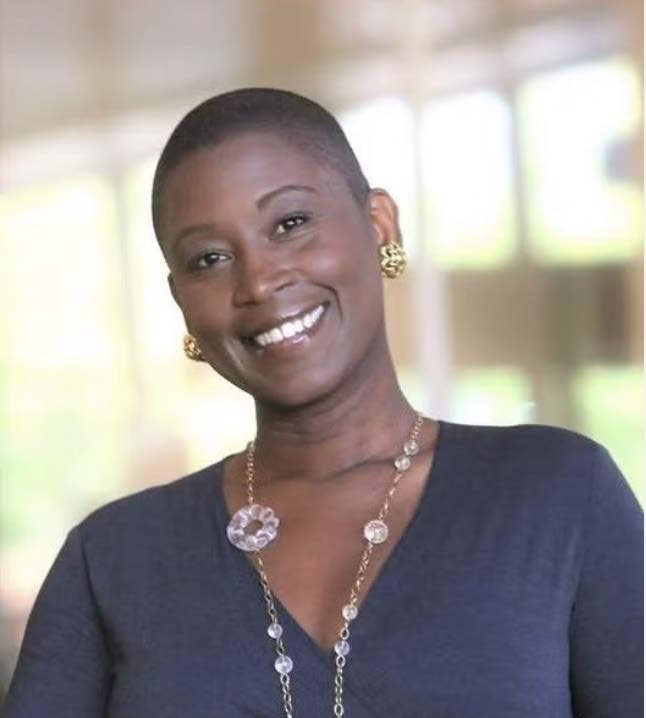
She argued that focusing on celebrity names connected to Epstein distracts from the deeper structural issues that allow trafficking to persist. Instead, Goodwin urged journalists and policymakers to center survivors in the conversation and examine why the legal system often fails to hold traffickers accountable.
Goodwin also addressed the barriers prosecutors face in trafficking cases, explaining that victims are often manipulated, threatened, or financially dependent on their traffickers. These realities make it difficult for survivors to testify or pursue justice.
Next to speak was Jacquelyn Aluotto, co-founder and president of the nonprofit organization No Trafficking Zone. Aluotto spoke about the importance of community awareness and prevention efforts.
She emphasized that trafficking can happen in everyday spaces that people might not immediately associate with exploitation. From hotels and transportation hubs to online platforms, traffickers often operate in plain sight.
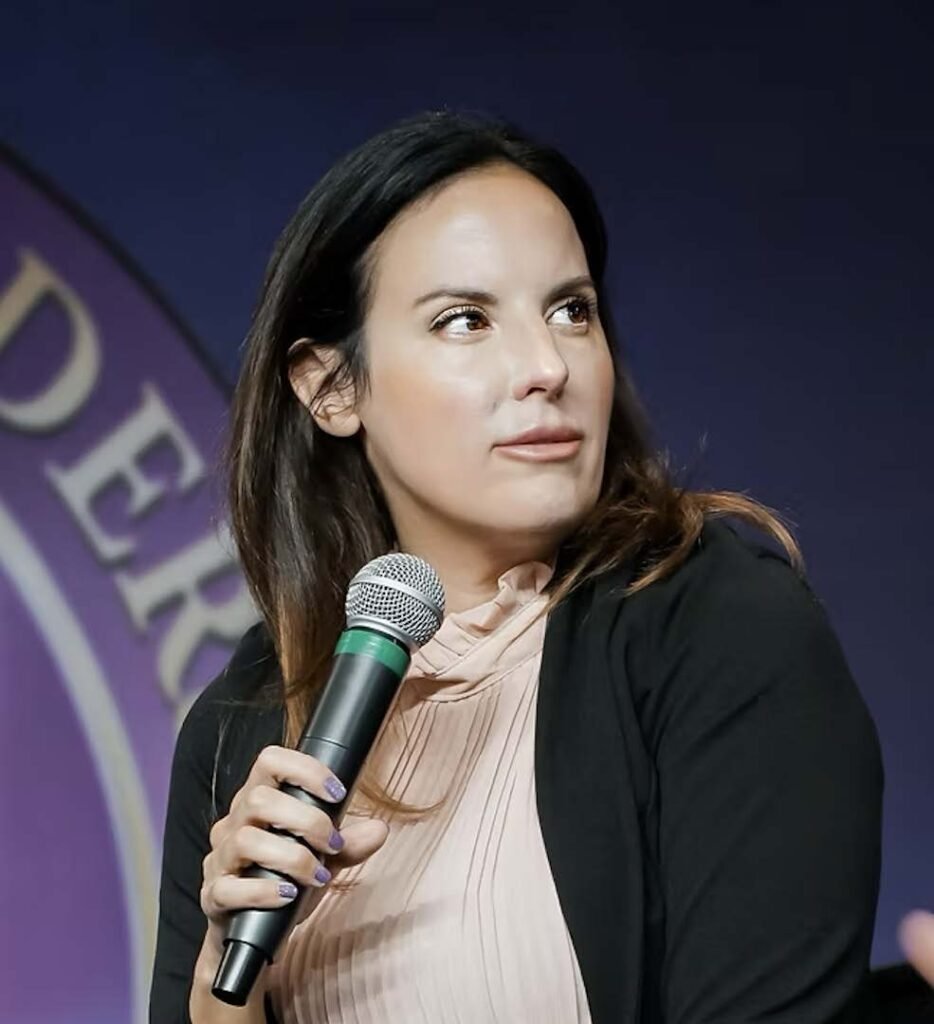
Aluotto said that education is one of the most powerful tools communities have to fight trafficking. By recognizing warning signs and reporting suspicious activity, everyday people can help disrupt trafficking networks and support victims.
Perhaps the most powerful moment of the briefing came when Courtney Litvak, a survivor of sex trafficking and former member of the U.S. Advisory Council to Combat Human Trafficking, shared her personal experience.
Litvak explained that she was trafficked as a teenager and spent years trying to escape her situation. Hearing her speak brought a human perspective to a topic that is often discussed only in statistics and policy language.
She stressed that survivors must be included in shaping laws and policies that affect them. “Survivors need to be at the front of these conversations,” Litvak said.
According to Litvak, many policies designed to combat trafficking fail because they are created without listening to the people who have actually experienced exploitation.

Her message was clear: real solutions must involve survivor leadership, trauma-informed support services, and long-term resources to help survivors rebuild their lives.
The final speaker, Carmen McDonald, Executive Director of the Survivor Justice Center, focused on the legal challenges survivors face even after escaping trafficking.
McDonald explained that many survivors struggle with legal issues that stem directly from their exploitation, including criminal records, immigration challenges, and financial instability.
Organizations like the Survivor Justice Center work to provide legal support and advocacy so survivors can access justice and rebuild their futures.
McDonald said that improving legal protections for survivors is essential if the country truly wants to combat trafficking. Without meaningful legal support, many survivors remain trapped in cycles of vulnerability.

Throughout the briefing, speakers returned to a central theme: the Epstein files may have captured global attention, but the broader issue of sex trafficking remains deeply misunderstood and underreported.
For many young people, especially within Latino communities that often rely on trusted community news outlets, awareness is critical. Experts say that understanding how trafficking operates and listening to survivor voices can help communities recognize warning signs and support prevention efforts.
The discussion made one thing clear. The story of the Epstein files should not simply be about powerful people connected to a scandal. Instead, it should serve as a wake-up call to confront the ongoing crisis of human trafficking and to ensure that survivors are finally heard.
As Marrero reminded journalists at the close of the briefing, the focus must remain on justice and accountability. The real measure of progress will not be how many headlines the files generate, but whether the conversation ultimately leads to meaningful change for survivors.
Archivos de Epstein reavivan el enfoque en sobrevivientes y la crisis del tráfico sexual
Un reciente briefing nacional organizado por American Community Media reunió a expertos legales, defensores de sobrevivientes y una sobreviviente de tráfico sexual para analizar la publicación de millones de documentos relacionados con el delincuente sexual convicto Jeffrey Epstein. Aunque muchos titulares en todo el país se han enfocado en los nombres de personas influyentes que aparecen en los archivos, los panelistas señalaron que la verdadera historia debe centrarse en los sobrevivientes y en la crisis más amplia del tráfico humano en Estados Unidos.
La sesión virtual fue moderada por Pilar Marrero, editora asociada de American Community Media, quien abrió la conversación señalando que la cobertura mediática sobre los más de 3.5 millones de documentos publicados relacionados con Epstein ha dejado a las víctimas en segundo plano.
“Los sobrevivientes que fueron explotados por Epstein y sus asociados han sido en gran parte relegados al margen de la conversación,” dijo Marrero. También señaló que los derechos de los sobrevivientes se vieron nuevamente vulnerados cuando el Departamento de Justicia de Estados Unidos no logró censurar correctamente los nombres de muchas víctimas en los documentos publicados. Durante una reciente audiencia del Senado, agregó, la fiscal general Pam Bondi no ofreció disculpas a los sobrevivientes presentes en la sala.
Más allá del caso Epstein, Marrero explicó que el problema refleja una crisis mucho más amplia. De acuerdo con la organización contra el tráfico humano Hope for Justice, más de un millón de personas son víctimas de tráfico humano cada año en el mundo, la mayoría mujeres jóvenes y niñas. Sin embargo, menos del uno por ciento de estos casos termina en un proceso judicial.
La primera panelista, la doctora Michele Goodwin, profesora de derecho constitucional y política global de salud en la Universidad de Georgetown, habló sobre los sistemas que permiten que el abuso y la explotación continúen sin consecuencias.
Goodwin explicó que el caso Epstein demuestra cómo el poder y el privilegio pueden silenciar a las víctimas. “Existe una conexión entre el poder, la violencia y el silenciamiento de las personas que han sido agredidas sexualmente,” señaló.
También advirtió que concentrarse únicamente en los nombres de celebridades vinculados al caso distrae de los problemas estructurales más profundos que permiten que el tráfico humano continúe. En lugar de eso, Goodwin pidió que los periodistas y los responsables de políticas públicas centren la conversación en los sobrevivientes y en las fallas del sistema legal que impiden que muchos traficantes enfrenten justicia.
Goodwin también explicó que los fiscales enfrentan grandes desafíos al intentar procesar casos de tráfico humano, ya que muchas víctimas son manipuladas, amenazadas o dependen económicamente de sus traficantes. Estas realidades hacen mucho más difícil que los sobrevivientes puedan testificar o buscar justicia.
La siguiente panelista fue Jacqueline Alioto, cofundadora y presidenta de la organización sin fines de lucro No Trafficking Zone. Alioto habló sobre la importancia de la prevención y la conciencia comunitaria.
Destacó que el tráfico humano puede ocurrir en lugares cotidianos que muchas personas no asocian con explotación. Desde hoteles y centros de transporte hasta plataformas digitales, los traficantes muchas veces operan a plena vista.
Alioto señaló que la educación es una de las herramientas más poderosas que tienen las comunidades para combatir el tráfico humano. Al aprender a reconocer las señales de alerta y reportar actividades sospechosas, las personas comunes pueden ayudar a interrumpir estas redes y apoyar a las víctimas.
Uno de los momentos más impactantes del briefing llegó cuando Courtney Litvak, sobreviviente de tráfico sexual y exmiembro del Consejo Asesor de Estados Unidos para Combatir el Tráfico Humano, compartió su historia personal.
Litvak explicó que fue víctima de tráfico humano cuando era adolescente y que pasó años tratando de escapar de esa situación. Escuchar su experiencia ofreció una perspectiva humana a un tema que muchas veces se discute únicamente con estadísticas y lenguaje político.
“Los sobrevivientes deben estar al frente de estas conversaciones,” dijo Litvak.
Según explicó, muchas políticas diseñadas para combatir el tráfico humano fracasan porque se crean sin escuchar a quienes han vivido la explotación.
Su mensaje fue claro: las soluciones reales deben incluir el liderazgo de sobrevivientes, servicios de apoyo informados por el trauma y recursos a largo plazo que ayuden a reconstruir las vidas de quienes han sido explotados.
La última panelista, Carmen McDonald, directora ejecutiva del Survivor Justice Center, habló sobre los desafíos legales que enfrentan los sobrevivientes incluso después de escapar del tráfico humano.
McDonald explicó que muchos sobrevivientes enfrentan problemas legales que son consecuencia directa de su explotación, incluyendo antecedentes penales, dificultades migratorias y problemas financieros.
Organizaciones como Survivor Justice Center trabajan para ofrecer apoyo legal y defensa para que los sobrevivientes puedan acceder a la justicia y reconstruir sus vidas.
McDonald señaló que mejorar las protecciones legales para los sobrevivientes es esencial si el país realmente quiere combatir el tráfico humano. Sin apoyo legal significativo, muchas víctimas continúan atrapadas en ciclos de vulnerabilidad.
A lo largo del briefing, los panelistas coincidieron en un punto central: los archivos de Epstein han captado la atención mundial, pero el problema del tráfico sexual sigue siendo profundamente incomprendido y poco reportado.
Para muchas comunidades, incluyendo la comunidad latina que a menudo depende de medios comunitarios confiables, la información y la conciencia son fundamentales. Los expertos aseguran que comprender cómo operan estas redes y escuchar las voces de los sobrevivientes puede ayudar a prevenir nuevos casos.
La conversación dejó algo claro. La historia de los archivos de Epstein no debe centrarse únicamente en las figuras poderosas relacionadas con el escándalo. Más bien, debe servir como una llamada de atención para enfrentar la crisis continua del tráfico humano y asegurar que las voces de los sobrevivientes finalmente sean escuchadas.
Como recordó Marrero al finalizar el briefing, el enfoque debe permanecer en la justicia y la rendición de cuentas. El verdadero progreso no se medirá por cuántos titulares generen estos documentos, sino por si la conversación logra impulsar cambios reales para los sobrevivientes.
About The Author




More Stories
No Place Left to Hide: How Expanding Surveillance Is Shaping Immigration Enforcement
Your Vote, Your Voice: Understanding Voting Rights in Texas
Public Health Experts Warn of Rising Vaccine Hesitancy in the United States