

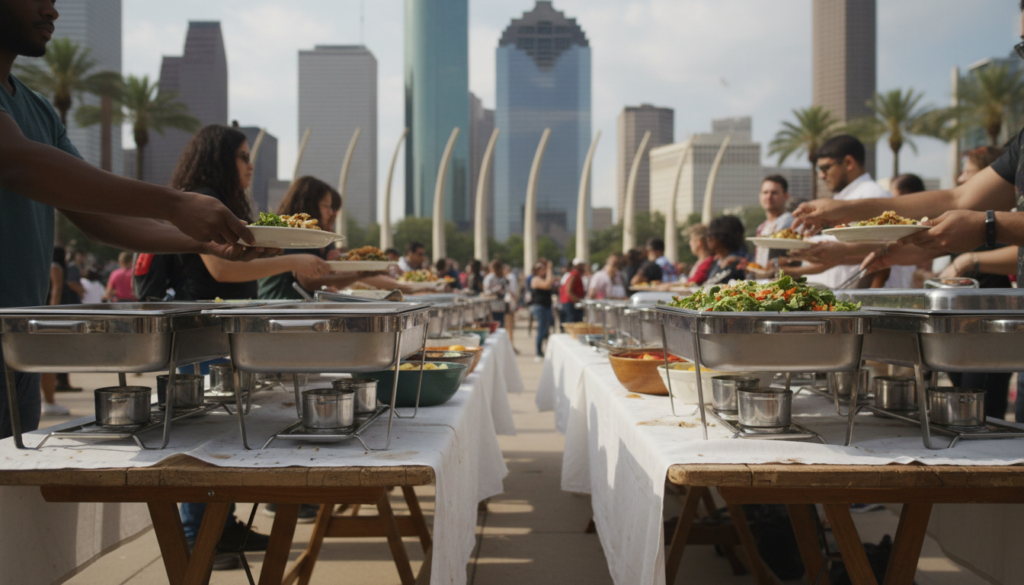
HOUSTON, Texas. A federal judge has ruled that Houston’s restrictions on Food Not Bombs volunteers serving free meals in a downtown public space violated their First Amendment rights as applied to their activities, marking a significant development in a yearslong dispute over food sharing near the city’s central library.
What the Court Decided
In an order dated November 3, U.S. District Judge Andrew S. Hanen concluded that the volunteers’ food sharing qualified as protected expressive conduct. The court also found that the city’s permission requirement, as applied to the plaintiffs, failed constitutional scrutiny because Houston had not justified its blanket refusal to permit their activities in the disputed location.
The ruling is narrower than declaring the entire charitable food services ordinance invalid in every circumstance. The judge granted parts of the plaintiffs’ summary judgment motions, denied the city’s motion, and requested proposed language for an injunction before issuing further relief and final judgment.
Years of Conflict Over Free Meals
Food Not Bombs volunteers have long served meals in downtown Houston while advocating for food access and the rights of people experiencing homelessness. The city sought to direct charitable food service to designated locations, arguing that regulation could address public health and other concerns. The group maintained that sharing meals in a public space was itself a form of expression and community solidarity.
According to local reporting, volunteers received more than 100 citations during the dispute. The legal challenge focused not only on feeding people but also on whether the government could restrict the group’s message through its permitting system.
What Happens Next
The court directed the parties to submit proposed injunction language within 30 days. Separate questions about potential damages also remain. The ruling does not eliminate the possibility of reasonable, constitutionally permissible health and sanitation measures.
For Houston residents, the decision highlights an ongoing debate over public spaces, homelessness, volunteerism and the ways neighbors organize to meet immediate needs.
Source: U.S. District Court for the Southern District of Texas, Food Not Bombs Houston et al. v. City of Houston, order dated November 3, 2026. Featured image is illustrative.
Juez federal determina que restricciones de Houston contra Food Not Bombs violaron derechos constitucionales
HOUSTON, Texas. Un juez federal determinó que las restricciones impuestas por Houston a los voluntarios de Food Not Bombs para repartir comidas gratuitas en un espacio público del centro vulneraron sus derechos de la Primera Enmienda, según su aplicación a las actividades del grupo. La decisión representa un avance importante en una disputa de varios años cerca de la biblioteca central de la ciudad.
Qué decidió el tribunal
En una orden del 3 de noviembre, el juez federal Andrew S. Hanen concluyó que la distribución de alimentos constituía una actividad expresiva protegida. También determinó que el requisito municipal de obtener permiso, tal como se aplicó a los demandantes, no superó el análisis constitucional porque Houston no justificó su negativa general a permitir las actividades en el lugar en disputa.
La resolución no declara inválida toda la ordenanza sobre servicios benéficos de alimentos en cualquier circunstancia. El juez concedió parcialmente las solicitudes de sentencia sumaria de los demandantes, rechazó la solicitud municipal y pidió propuestas para una orden judicial antes de emitir medidas adicionales y una sentencia definitiva.
Años de conflicto por las comidas gratuitas
Los voluntarios de Food Not Bombs llevan años distribuyendo alimentos en el centro de Houston y defendiendo el acceso a la comida y los derechos de las personas sin hogar. La ciudad intentó trasladar esos servicios a lugares designados, argumentando motivos de salud pública y otras preocupaciones. El grupo sostuvo que compartir alimentos en un espacio público también constituye una expresión de solidaridad comunitaria.
Según reportes locales, los voluntarios recibieron más de 100 citaciones durante el conflicto. El litigio abordó tanto el reparto de alimentos como la capacidad del gobierno para restringir el mensaje del grupo mediante permisos.
Qué sigue
El tribunal ordenó a las partes presentar propuestas de una medida cautelar dentro de 30 días. También quedan pendientes cuestiones relacionadas con posibles indemnizaciones. La decisión no impide que existan medidas razonables de salud e higiene que respeten la Constitución.
Para los residentes de Houston, el fallo pone de relieve el debate sobre los espacios públicos, la falta de vivienda, el voluntariado y las formas en que los vecinos responden a necesidades inmediatas.
Fuente: Tribunal Federal del Distrito Sur de Texas, Food Not Bombs Houston y otros contra la Ciudad de Houston, orden del 3 de noviembre de 2026. Imagen destacada ilustrativa.
About The Author




More Stories
Before the Midterms, Community Journalists Heard Anxiety and Determination
Houston Mayor John Whitmire Announces New Limits on Police Cooperation With ICE
Northwest Harris County Teenager Fatally Stabbed, Another Teen Detained