

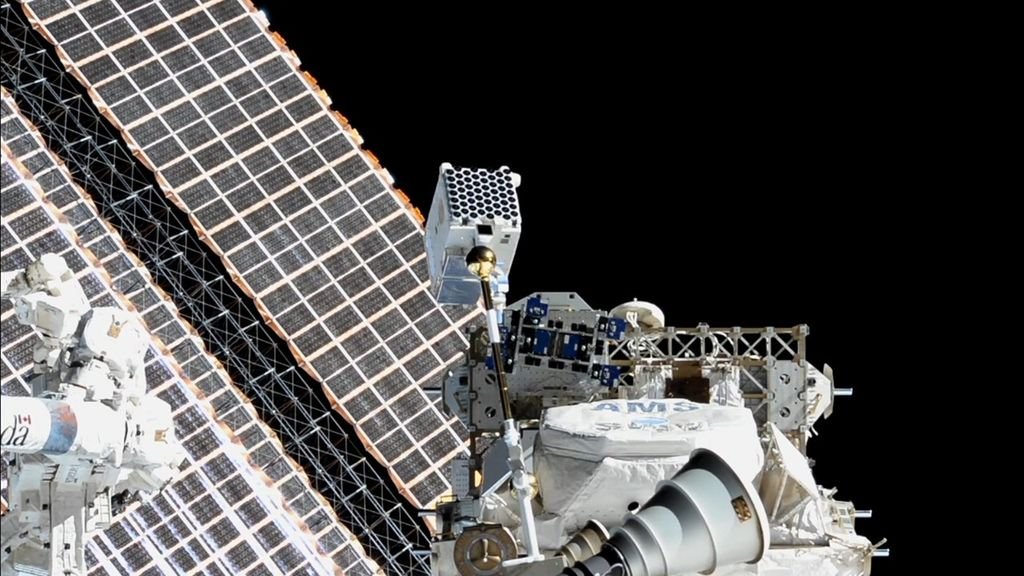
NASA has ended science operations for NICER, the X-ray telescope that spent years studying neutron stars and black holes from the International Space Station. The agency announced the decision Nov. 17 and said mission teams are working to finalize an eight-year archive of observations.
NICER launched in 2017 with an initial mission planned for 18 months. The telescope recorded X-rays from some of the most extreme environments in the universe. Its measurements helped scientists study what happens to matter inside neutron stars, the exceptionally dense remnants left behind by some stellar explosions.
NASA paused observations in June 2025 after the telescope lost its ability to swivel side to side. Cameras outside the station helped rule out external causes. Engineers now suspect an internal motor failure. NASA said teams are planning to decommission and detach the instrument from its position near the station’s starboard solar array.
The mission also demonstrated how the regular pulses from certain stars can help a spacecraft navigate. Because those pulses arrive at predictable intervals, a spacecraft can use their timing as a reference. NASA has described the experiment as a step toward navigation farther from Earth.
La NASA pone fin a las operaciones científicas del telescopio NICER
La NASA puso fin a las operaciones científicas de NICER, el telescopio de rayos X que durante años estudió estrellas de neutrones y agujeros negros desde la Estación Espacial Internacional. La agencia anunció la decisión el 17 de noviembre y señaló que los equipos trabajan para completar un archivo de ocho años de observaciones.
NICER se lanzó en 2017 con una misión inicial de 18 meses. El telescopio registró rayos X procedentes de algunos de los entornos más extremos del universo. Sus mediciones ayudaron a estudiar qué ocurre con la materia dentro de las estrellas de neutrones, los restos excepcionalmente densos que dejan algunas explosiones estelares.
La NASA suspendió las observaciones en junio de 2025, después de que el telescopio perdiera la capacidad de girar de lado a lado. Las cámaras exteriores de la estación ayudaron a descartar causas externas. Los ingenieros sospechan ahora que falló un motor interno. La agencia planea retirar el instrumento y separarlo del punto donde está instalado, cerca del panel solar de estribor de la estación.
La misión también demostró cómo los pulsos regulares de ciertas estrellas pueden orientar una nave espacial. Como llegan a intervalos predecibles, la nave puede usar su ritmo como referencia. La NASA ha descrito el experimento como un paso hacia la navegación a mayor distancia de la Tierra.
About The Author





More Stories
Oregon exhibit looks at how painters made Crater Lake famous
ARTCRAWL Houston brings contemporary art to the Warehouse District Saturday
Post offices will close for Thanksgiving, with regular mail back Friday