

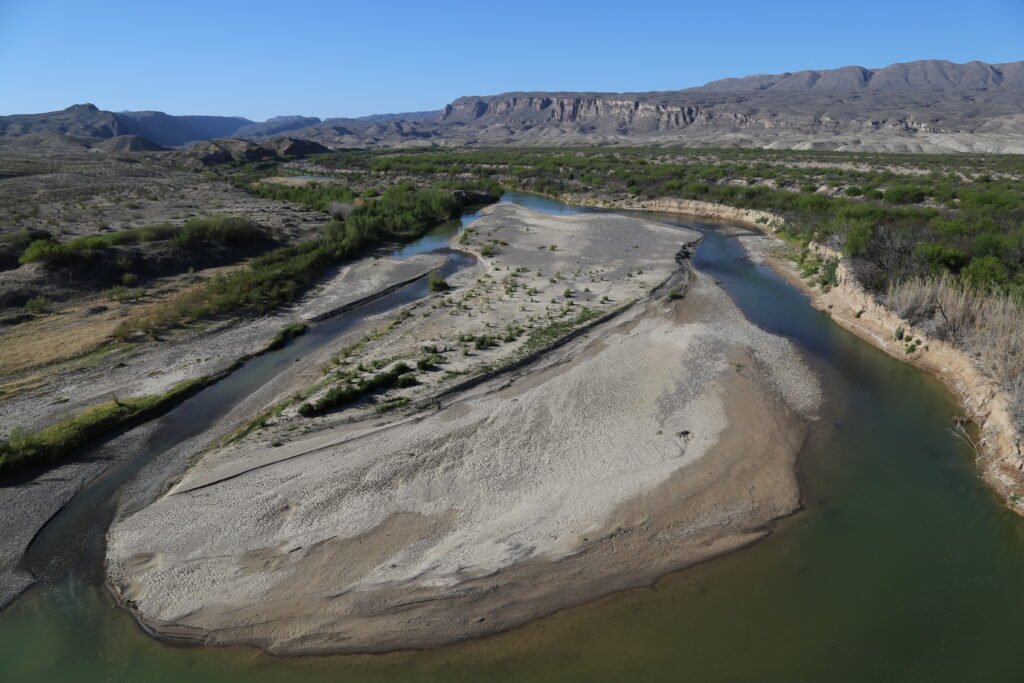
The U.S. Supreme Court on November 9 suspended an injunction that had blocked federal border-barrier construction in the Big Bend region. The order removes that obstacle while the government pursues further review; it does not establish that construction has already resumed.
A dispute over the court’s authority
The case concerns the federal government’s authority to waive legal requirements for border infrastructure. The Supreme Court said the government was highly likely to prevail on its argument that the district court lacked jurisdiction over the challengers’ statutory claims.
The majority distinguished those claims from constitutional challenges, which the relevant law permits district courts to hear. Its order addresses the government’s request for a stay, rather than resolving every underlying objection to the project in a final merits judgment.
Justice Ketanji Brown Jackson would have denied the stay. The order did not provide a separate explanation of her position.
Conservation concerns remain
The Texas Tribune reported that the challengers include the Center for Biological Diversity, Friends of the Ruidosa Church and a local river guide. Their lawsuit has challenged construction in a region that includes Big Bend National Park.
A conservation advocate told the Tribune that allowing work before the legal dispute is settled risks irreversible damage. That concern is the challengers’ position, not a finding that the Supreme Court adopted in its order.
What happens next
The stay is tied to the timely filing and resolution of the government’s petition for Supreme Court review. If review is denied, it ends automatically. If review is granted, the order specifies that the stay continues until the Court’s judgment is sent down.
For the region, the immediate change is procedural but consequential: the lower-court injunction no longer prevents the disputed work while that review process unfolds.
Image note: Archive photograph of the Rio Grande in Big Bend National Park, March 2017; it does not show current construction. Photo: Jeffery Bennett/National Park Service, public domain.
La Corte Suprema suspende la orden que bloqueaba obras fronterizas en Big Bend
La Corte Suprema de Estados Unidos suspendió el 9 de noviembre una orden que bloqueaba obras federales de barreras fronterizas en la región de Big Bend. La decisión elimina ese obstáculo mientras el gobierno busca una revisión adicional; no demuestra que las obras ya se hayan reanudado.
Una disputa sobre la competencia judicial
El caso trata de la autoridad federal para eximir requisitos legales en proyectos de infraestructura fronteriza. La Corte Suprema señaló que era muy probable que el gobierno prevaleciera con su argumento de que el tribunal de distrito carecía de competencia sobre las impugnaciones basadas en la legislación.
La mayoría distinguió esos argumentos de las impugnaciones constitucionales, que la ley pertinente sí permite examinar a los tribunales de distrito. La orden responde a una solicitud de suspensión del gobierno, sin resolver definitivamente todas las objeciones de fondo al proyecto.
La jueza Ketanji Brown Jackson habría rechazado la suspensión. La orden no incluyó una explicación separada de su postura.
Persisten las preocupaciones ambientales
The Texas Tribune informó que los demandantes incluyen al Centro para la Diversidad Biológica, Friends of the Ruidosa Church y un guía fluvial local. Su demanda ha cuestionado obras en una región que incluye el Parque Nacional Big Bend.
Un defensor de la conservación dijo al Tribune que permitir trabajos antes de resolver la disputa supone un riesgo de daños irreversibles. Esa preocupación representa la postura de los demandantes, no una conclusión adoptada por la Corte Suprema.
Qué sigue
La suspensión está vinculada con la presentación oportuna y resolución de la petición gubernamental de revisión ante la Corte Suprema. Si se deniega la revisión, termina automáticamente. Si se concede, la orden establece que continuará hasta que se remita la sentencia de la Corte al tribunal inferior.
Para la región, el cambio inmediato es procesal, pero importante: la orden del tribunal inferior ya no impide las obras cuestionadas mientras continúa ese proceso de revisión.
Nota sobre la imagen: Fotografía de archivo del río Grande en el Parque Nacional Big Bend, marzo de 2017; no muestra obras actuales. Foto: Jeffery Bennett/National Park Service, dominio público.
About The Author

More Stories
League City maps next steps after voters reject roadway cameras
Data-center oversight enters Texas’ 2027 bill-filing debate
Texas water board to consider flood funding for San Marcos and Austin