

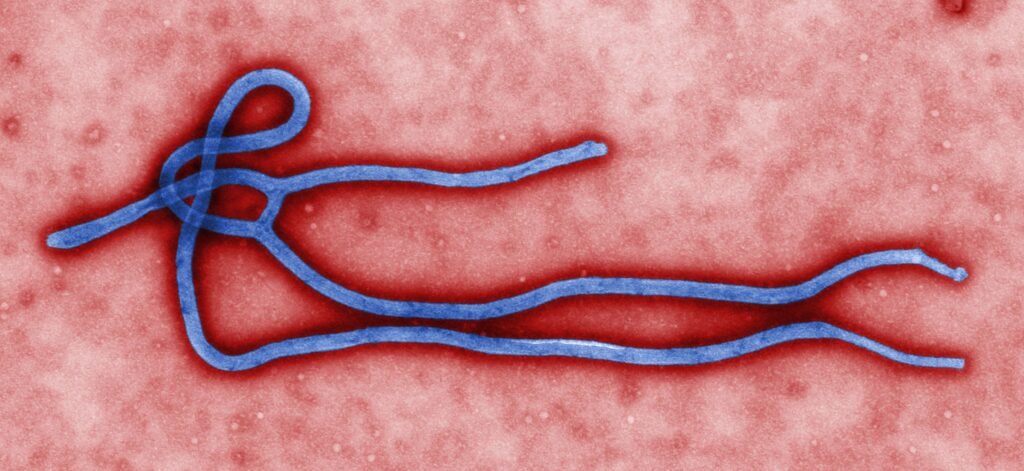
Two experimental vaccine candidates have been recommended for addition to an Ebola trial in the Democratic Republic of the Congo. The World Health Organization announced on November 4 that ChAdOx1, developed by Oxford and the Serum Institute of India, and Moderna’s mRNA-1469 could join the Tumaini study after national approvals.
A recommendation to study, not proof of protection
The candidates target Bundibugyo virus, which is responsible for the current outbreak. Their proposed inclusion is a research milestone, not a finding that either vaccine prevents disease.
A large outbreak continues
In its November 6 outbreak update, WHO reported 10,668 confirmed cases and 5,198 deaths in the DRC through November 3. Cases had been recorded in 67 health zones across eight provinces. The agency highlighted persistent problems detecting illness early and reaching appropriate care.
Those figures describe a dated surveillance report. They are not a live tally and may be revised as health authorities reconcile records.
Why the virus type matters
The European Centre for Disease Prevention and Control reported that Tumaini began in Bunia on October 23. The study includes Ervebo, a vaccine licensed for a different Ebola virus, to investigate whether it offers protection against Bundibugyo. Existing authorization against one virus does not establish effectiveness against another.
Clinical research must operate alongside the everyday work of outbreak control: identifying cases, following contacts and providing care. For communities affected by Ebola, the value of a promising vaccine depends on evidence of protection, safe delivery and access, rather than the announcement of a trial alone.
La OMS recomienda dos vacunas candidatas para el ensayo contra el ébola en el Congo
Dos vacunas experimentales han sido recomendadas para incorporarse a un ensayo contra el ébola en la República Democrática del Congo. La Organización Mundial de la Salud anunció el 4 de noviembre que ChAdOx1, desarrollada por Oxford y el Serum Institute of India, y mRNA-1469 de Moderna podrían sumarse al estudio Tumaini después de obtener las autorizaciones nacionales.
Una recomendación para investigar, no una prueba de protección
Las candidatas están dirigidas al virus de Bundibugyo, responsable del brote actual. Su posible incorporación es un avance de investigación, no una conclusión de que cualquiera de ellas prevenga la enfermedad.
Continúa un brote de gran magnitud
En su actualización del 6 de noviembre, la OMS reportó 10.668 casos confirmados y 5.198 muertes en la RDC hasta el 3 de noviembre. Se habían registrado casos en 67 zonas sanitarias de ocho provincias. El organismo destacó dificultades persistentes para detectar la enfermedad a tiempo y acceder a atención adecuada.
Las cifras corresponden a un informe de vigilancia con fecha determinada. No son un conteo en tiempo real y pueden revisarse cuando las autoridades sanitarias concilian sus registros.
Por qué importa el tipo de virus
El Centro Europeo para la Prevención y el Control de las Enfermedades informó que Tumaini comenzó en Bunia el 23 de octubre. El estudio incluye Ervebo, una vacuna autorizada para otro virus del ébola, para investigar si protege contra Bundibugyo. Una autorización frente a un virus no demuestra eficacia frente a otro.
La investigación clínica debe acompañar el trabajo cotidiano de control del brote: identificar casos, dar seguimiento a contactos y proporcionar atención. Para las comunidades afectadas por el ébola, el valor de una vacuna prometedora depende de la evidencia de protección, una distribución segura y el acceso, no solamente del anuncio de un ensayo.
About The Author





More Stories
Joshua Wong’s 10-year sentence sparks a diplomatic dispute
Haitian authorities report gang leader Mathias Saintil’s death
Pope Leo opens Latin America visit with a call for cooperation