

NASA’s Neil Gehrels Swift Observatory has returned to Earth after nearly 22 years in space, ending a mission that helped astronomers study some of the universe’s most powerful explosions.
Reentry Confirmed Over Indonesia
The U.S. Space Force confirmed that the spacecraft reentered Earth’s atmosphere on Wednesday, November 4, 2026, at 7:39 a.m. Eastern time over the North Sumatra region of Indonesia. NASA expected most of the satellite to burn up during reentry, although some components may have survived. The agency did not initially confirm whether any debris reached the ground.
A Two-Year Mission That Lasted Decades
Launched in November 2004, Swift was designed for a primary mission of approximately two years. Instead, it spent nearly 22 years studying gamma-ray bursts, extraordinarily energetic flashes associated with some of the most violent events in the cosmos.
The observatory combined three telescopes to detect fleeting events across different wavelengths. Its ability to quickly redirect observations and notify other facilities allowed scientists around the world to investigate explosions before they faded.
Swift also contributed to research on supernovae, active galaxies, black holes, stellar flares and objects within our solar system. Over the course of its long mission, it helped transform the study of short-lived astronomical events into a coordinated international effort.
What Scientists Lose and What Remains
The spacecraft’s loss ends a valuable stream of observations, but the data gathered during its lifetime will continue to support scientific research. Other observatories can investigate many of the same phenomena, though replacing Swift’s combination of instruments and rapid response will be challenging.
Swift’s longevity is a reminder that scientific missions can continue delivering discoveries far beyond their original design life.
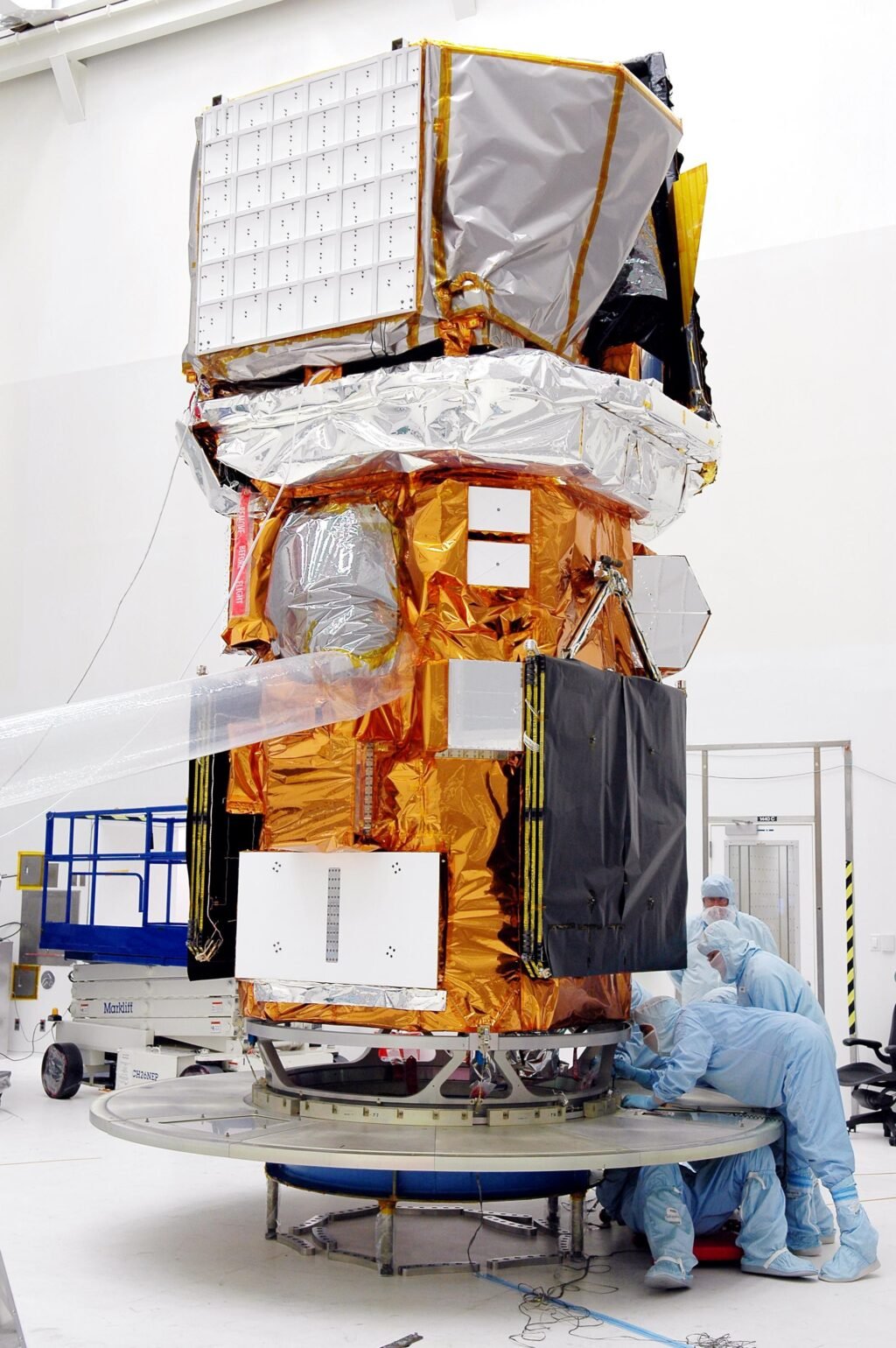
Source: NASA, November 4, 2026 mission update. Featured image: NASA photograph of the Swift spacecraft during prelaunch preparations in 2004, not the reentry.
Observatorio Swift de la NASA regresa a la Tierra tras casi 22 años estudiando el universo
El Observatorio Neil Gehrels Swift de la NASA regresó a la Tierra después de casi 22 años en el espacio. Así concluyó una misión que ayudó a los astrónomos a estudiar algunas de las explosiones más poderosas del universo.
Confirman reingreso sobre Indonesia
La Fuerza Espacial de Estados Unidos confirmó que la nave reingresó a la atmósfera terrestre el miércoles 4 de noviembre de 2026 a las 7:39 a. m., hora del Este, sobre la región de Sumatra del Norte, Indonesia. La NASA esperaba que la mayor parte del satélite se desintegrara durante el reingreso, aunque algunos componentes podrían haber sobrevivido. Inicialmente, la agencia no confirmó si fragmentos alcanzaron la superficie.
Una misión de dos años que duró décadas
Lanzado en noviembre de 2004, Swift fue diseñado para una misión principal de aproximadamente dos años. En cambio, pasó casi 22 años estudiando estallidos de rayos gamma, destellos extremadamente energéticos asociados con algunos de los fenómenos más violentos del cosmos.
El observatorio combinaba tres telescopios para detectar acontecimientos fugaces en distintas longitudes de onda. Su capacidad para redirigir rápidamente las observaciones y alertar a otras instalaciones permitió que científicos de todo el mundo estudiaran las explosiones antes de que desaparecieran.
Swift también contribuyó a investigaciones sobre supernovas, galaxias activas, agujeros negros, llamaradas estelares y objetos de nuestro sistema solar. Durante su extensa misión, ayudó a convertir el estudio de fenómenos astronómicos breves en un esfuerzo internacional coordinado.
Qué pierde la ciencia y qué permanece
La pérdida de la nave pone fin a una valiosa fuente de observaciones, pero los datos recopilados seguirán respaldando investigaciones. Otros observatorios pueden estudiar muchos de los mismos fenómenos, aunque reemplazar la combinación de instrumentos y la rápida respuesta de Swift será difícil.
La longevidad de Swift recuerda que las misiones científicas pueden seguir aportando descubrimientos mucho después de su vida útil originalmente prevista.
Fuente: actualización de la NASA del 4 de noviembre de 2026. Imagen destacada: fotografía de la NASA de la nave Swift durante los preparativos previos al lanzamiento en 2004, no de su reingreso.
About The Author





More Stories
Before the Midterms, Community Journalists Heard Anxiety and Determination
WHO Recommends Two Vaccine Candidates for Congo’s Ebola Trial
Houston Mayor John Whitmire Announces New Limits on Police Cooperation With ICE