

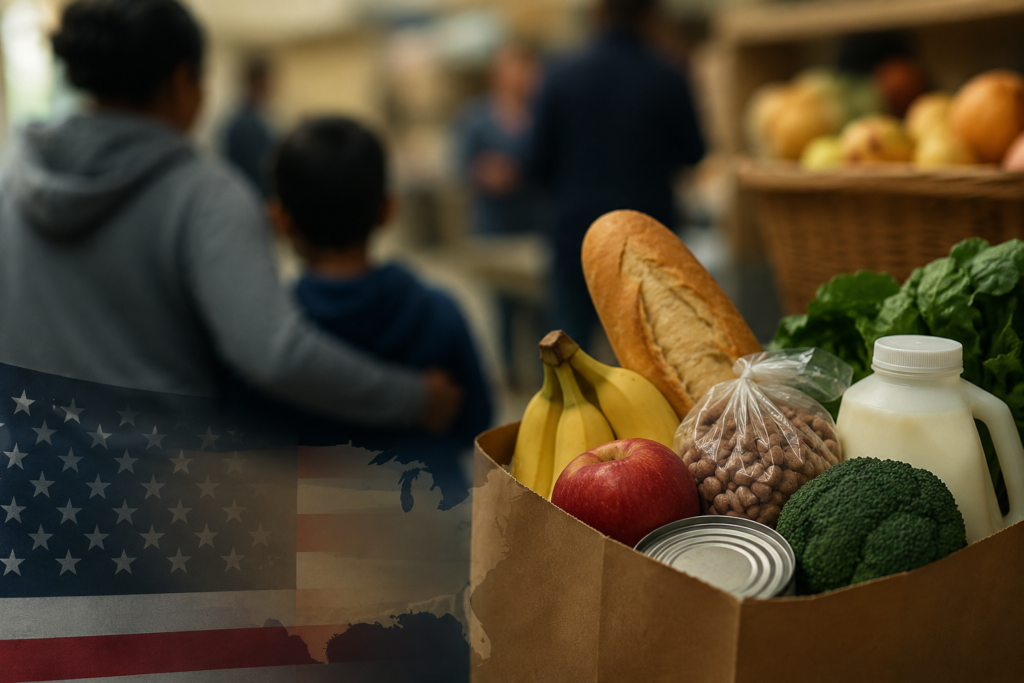
More than 3 million Americans have already lost access to SNAP benefits as major federal cuts to the nation’s largest food assistance program take effect, raising urgent concerns for families, children, seniors, people with disabilities and immigrant communities across the country.
That was the focus of a May 8 national briefing hosted by American Community Media in partnership with the Robert Wood Johnson Foundation. The briefing, titled “3 Million Americans Lose Critical Food Safety Net, as Dramatic Cuts to SNAP Take Effect,” examined how cuts to the Supplemental Nutrition Assistance Program, known as SNAP, are reshaping food access, public health and local economies.
A Critical Safety Net Under Pressure
Sunita Sohrabji, health editor and co-producer of American Community Media’s weekly national news briefings, opened the session by placing the issue in a national context. “Today’s briefing is in partnership with the Robert Wood Johnson Foundation, which is the US’s largest health focused philanthropy,” Sohrabji said. She explained that speakers would introduce reporters to the Congressional District Health Dashboard, a tool that provides district-level data on health and social conditions across the United States.
Sohrabji said the issue is urgent because Congress passed HR1, also known as the One Big Beautiful Bill, which cut almost $1 trillion from critical health and food safety nets and imposed new eligibility requirements. She noted that SNAP’s budget was cut by $187 billion through 2034, calling it “the largest cut to the program since it began in 1964.”
Dr. Giridhar Mallya, Senior Policy Officer at the Robert Wood Johnson Foundation and a public health physician, said the consequences are already being felt. “I just want to emphasize what’s at stake right now,” Dr. Mallya said. “Based on national data, we’ve seen that 3 million people have lost SNAP benefits since July of last year in the wake of the big beautiful bill.”
Families Are Already Feeling the Loss
He warned that more families could soon face reduced or eliminated benefits. “It’s likely that another million people could either lose benefits or see them drastically reduced,” Dr. Mallya said. “No one especially kids, people with disabilities, veterans, older adults should be left wondering if they can afford their next meal.”
SNAP currently helps about 42 million people buy groceries. Dr. Mallya said nearly four in 10 SNAP participants are children, while the program also serves seniors, people with disabilities and working adults who still cannot afford basic needs. He said the average individual benefit is about $188 per month, while the average household receives about $332 monthly, which works out to roughly $1.50 per meal.
For families already facing high grocery prices, housing costs and rising food bank demand, the cuts come at a difficult time. Food banks in several states are reporting growing pressure as families who lose benefits turn to local charities for emergency meals. At the same time, public debate has intensified over whether lower SNAP participation reflects fraud reduction or stricter eligibility rules. Recent reporting and policy analysis point to the new federal law, expanded work requirements and administrative barriers as major reasons people are losing benefits.
Local Data Shows Who Is Most at Risk
Dr. Lorna E. Thorpe, Methods Co-Principal Investigator of the Congressional District Health Dashboard and Chair of the Department of Population Health at NYU Grossman School of Medicine, said local data is essential to understanding the impact.
“In a moment when SNAP policy is actively changing, we believe that having timely local data on SNAP participation is more important than ever,” Dr. Thorpe said. She explained that the dashboard now includes a new SNAP participation metric, which measures the percentage of households participating in SNAP in every congressional district.
Dr. Thorpe said the dashboard combines data from the American Community Survey and the U.S. Department of Agriculture’s Food and Nutrition Service. “We provide SNAP estimates for each quarter of the year,” she said, adding that the data spans from the end of 2022 through the fall of 2025 and will be updated twice annually.
The dashboard shows that more than one in six U.S. households participate in SNAP, but participation varies widely by district. Dr. Thorpe said some districts have participation rates as low as 3 percent, while others reach nearly 60 percent. In California, she noted, SNAP participation is higher than the national average, with some Central Valley districts showing nearly half of households using SNAP.
Immigrant Families Face Added Fear
The cuts are expected to hit communities of color, immigrant families and mixed-status households especially hard. Dr. Mallya said new rules have removed benefits from some lawfully present immigrants, including refugees, asylees and trafficking survivors. He also warned that fear of immigration enforcement is discouraging eligible families from applying.
“These changes combined with wider anti-immigrant actions by the Trump administration are having a chilling effect leading to drops in participation among eligible, lawfully present immigrants and among citizen children of undocumented parents,” Dr. Mallya said.
That chilling effect could leave U.S. citizen children without food assistance even when they remain legally eligible. Families may avoid SNAP because they fear sharing information with the government or believe applying could expose relatives to immigration consequences.
States and Food Banks Cannot Fill the Gap Alone
The briefing also highlighted a major economic issue for states. Beginning this year, states are expected to carry more SNAP administrative costs, and by 2027 many will have to pay part of the actual food benefit costs. Dr. Mallya said that could force states to raise revenue, cut other programs or reduce SNAP access further.
Reporters asked whether food banks or other programs could replace lost SNAP benefits. Dr. Mallya said those resources are important but not enough. “For every one meal that food banks provide, the SNAP program provides nine meals,” he said. “So the scale is just extraordinarily different.”
Why the Dashboard Matters Now
Dr. Thorpe closed by stressing that the new dashboard gives journalists, policymakers and community advocates a way to track real changes. “SNAP is a lifeline for millions of families and these new data provide a baseline for what’s happening on the ground,” she said.
Dr. Mallya echoed that message, calling SNAP “a public health success and one that’s worth protecting.” He urged reporters to use local data to tell stories about what the program means to families in their own communities.
“In the richest country in the world, we can do better,” Dr. Mallya said. “It’s stories like the ones that you are going to tell that can help us make a difference.”
Recortes a SNAP ponen en riesgo a familias, inmigrantes y comunidades locales mientras nuevo panel de salud rastrea el impacto
Más de 3 millones de personas en Estados Unidos ya han perdido acceso a beneficios de SNAP mientras entran en vigor importantes recortes federales al programa de asistencia alimentaria más grande del país, generando preocupación urgente para familias, niños, adultos mayores, personas con discapacidades y comunidades inmigrantes.
Ese fue el tema central de una conferencia nacional del 8 de mayo organizada por American Community Media en alianza con la Robert Wood Johnson Foundation. La sesión, titulada “3 Million Americans Lose Critical Food Safety Net, as Dramatic Cuts to SNAP Take Effect,” examinó cómo los recortes al Programa de Asistencia Nutricional Suplementaria, conocido como SNAP, están afectando el acceso a alimentos, la salud pública y las economías locales.
Una red de seguridad bajo presión
Sunita Sohrabji, editora de salud y coproductora de las conferencias nacionales semanales de American Community Media, abrió la sesión colocando el tema en un contexto nacional. “La conferencia de hoy es en alianza con la Robert Wood Johnson Foundation, que es la filantropía enfocada en salud más grande de Estados Unidos,” dijo Sohrabji. Explicó que los ponentes presentarían a los reporteros el Congressional District Health Dashboard, una herramienta que ofrece datos a nivel de distrito sobre condiciones de salud y factores sociales en todo el país.
Sohrabji dijo que el tema es urgente porque el Congreso aprobó HR1, también conocido como el One Big Beautiful Bill, que recortó casi $1 billón de redes críticas de salud y seguridad alimentaria e impuso nuevos requisitos de elegibilidad. Señaló que el presupuesto de SNAP fue recortado por $187 mil millones hasta 2034, llamándolo “el recorte más grande al programa desde que comenzó en 1964.”
El Dr. Giridhar Mallya, Senior Policy Officer de la Robert Wood Johnson Foundation y médico de salud pública, dijo que las consecuencias ya se sienten. “Solo quiero enfatizar lo que está en juego en este momento,” dijo el Dr. Mallya. “Basado en datos nacionales, hemos visto que 3 millones de personas han perdido beneficios de SNAP desde julio del año pasado tras el big beautiful bill.”
Las familias ya sienten la pérdida
El Dr. Mallya advirtió que más familias podrían enfrentar pronto beneficios reducidos o eliminados. “Es probable que otro millón de personas pueda perder beneficios o verlos reducidos drásticamente,” dijo. “Nadie, especialmente niños, personas con discapacidades, veteranos y adultos mayores, debería preguntarse si podrá pagar su próxima comida.”
Actualmente, SNAP ayuda a aproximadamente 42 millones de personas a comprar alimentos. El Dr. Mallya dijo que casi cuatro de cada 10 participantes de SNAP son niños, mientras que el programa también sirve a adultos mayores, personas con discapacidades y adultos que trabajan pero aún no pueden cubrir sus necesidades básicas. Dijo que el beneficio promedio individual es de aproximadamente $188 al mes, mientras que el hogar promedio recibe alrededor de $332 mensuales, lo que equivale a cerca de $1.50 por comida.
Para familias que ya enfrentan altos precios de alimentos, costos de vivienda y una mayor demanda en bancos de comida, los recortes llegan en un momento difícil. Bancos de alimentos en varios estados están reportando más presión mientras familias que pierden beneficios recurren a organizaciones locales para comidas de emergencia. Al mismo tiempo, el debate público se ha intensificado sobre si la disminución en participación de SNAP refleja reducción de fraude o reglas de elegibilidad más estrictas. Reportes recientes y análisis de políticas apuntan a la nueva ley federal, los requisitos de trabajo ampliados y las barreras administrativas como razones principales por las que las personas están perdiendo beneficios.
Datos locales muestran quién está en mayor riesgo
La Dra. Lorna E. Thorpe, Methods Co-Principal Investigator del Congressional District Health Dashboard y Chair del Department of Population Health en NYU Grossman School of Medicine, dijo que los datos locales son esenciales para entender el impacto.
“En un momento en que la política de SNAP está cambiando activamente, creemos que tener datos locales oportunos sobre la participación en SNAP es más importante que nunca,” dijo la Dra. Thorpe. Explicó que el panel ahora incluye una nueva métrica de participación en SNAP, que mide el porcentaje de hogares que participan en SNAP en cada distrito congresional.
La Dra. Thorpe dijo que el panel combina datos de la American Community Survey y del Food and Nutrition Service del Departamento de Agricultura de Estados Unidos. “Proveemos estimaciones de SNAP para cada trimestre del año,” dijo, agregando que los datos abarcan desde finales de 2022 hasta el otoño de 2025 y serán actualizados dos veces al año.
El panel muestra que más de uno de cada seis hogares en Estados Unidos participa en SNAP, pero la participación varía ampliamente por distrito. La Dra. Thorpe dijo que algunos distritos tienen tasas de participación tan bajas como 3 por ciento, mientras que otros alcanzan casi 60 por ciento. En California, señaló, la participación en SNAP es más alta que el promedio nacional, con algunos distritos del Valle Central mostrando que casi la mitad de los hogares usan SNAP.
Familias inmigrantes enfrentan miedo adicional
Se espera que los recortes afecten especialmente a comunidades de color, familias inmigrantes y hogares de estatus migratorio mixto. El Dr. Mallya dijo que las nuevas reglas han quitado beneficios a algunos inmigrantes legalmente presentes, incluyendo refugiados, asilados y sobrevivientes de trata. También advirtió que el miedo a la aplicación de leyes migratorias está desalentando a familias elegibles a solicitar ayuda.
“Estos cambios combinados con acciones antiinmigrantes más amplias de la administración Trump están teniendo un efecto intimidante que lleva a caídas en la participación entre inmigrantes elegibles, legalmente presentes, y entre niños ciudadanos de padres indocumentados,” dijo el Dr. Mallya.
Ese efecto intimidante podría dejar a niños ciudadanos estadounidenses sin asistencia alimentaria incluso cuando siguen siendo legalmente elegibles. Las familias pueden evitar SNAP porque temen compartir información con el gobierno o creen que solicitar ayuda podría exponer a familiares a consecuencias migratorias.
Los estados y bancos de comida no pueden llenar el vacío solos
La conferencia también destacó un importante problema económico para los estados. A partir de este año, se espera que los estados asuman más costos administrativos de SNAP, y para 2027 muchos tendrán que pagar parte de los costos reales de los beneficios alimentarios. El Dr. Mallya dijo que eso podría obligar a los estados a aumentar ingresos, recortar otros programas o reducir aún más el acceso a SNAP.
Reporteros preguntaron si los bancos de comida u otros programas podrían reemplazar los beneficios perdidos de SNAP. El Dr. Mallya dijo que esos recursos son importantes, pero no suficientes. “Por cada comida que proveen los bancos de comida, el programa SNAP provee nueve comidas,” dijo. “Así que la escala es simplemente extraordinariamente diferente.”
Por qué el panel importa ahora
La Dra. Thorpe cerró enfatizando que el nuevo panel ofrece a periodistas, legisladores y defensores comunitarios una manera de rastrear cambios reales. “SNAP es una línea de vida para millones de familias y estos nuevos datos ofrecen una base para entender lo que está pasando en el terreno,” dijo.
El Dr. Mallya repitió ese mensaje, llamando a SNAP “un éxito de salud pública y uno que vale la pena proteger.” Instó a los reporteros a usar datos locales para contar historias sobre lo que el programa significa para familias en sus propias comunidades.
“En el país más rico del mundo, podemos hacerlo mejor,” dijo el Dr. Mallya. “Son historias como las que ustedes van a contar las que pueden ayudarnos a marcar una diferencia.”
About The Author



More Stories
Houston Text Fest 2026: A Community’s Stories Come Together (Photo Gallery)
2026 Midterm Voting Barriers: What Ethnic Communities Need to Know
Supreme Court Mail-In Voting Ruling: What It Means for the 2026 Midterms