

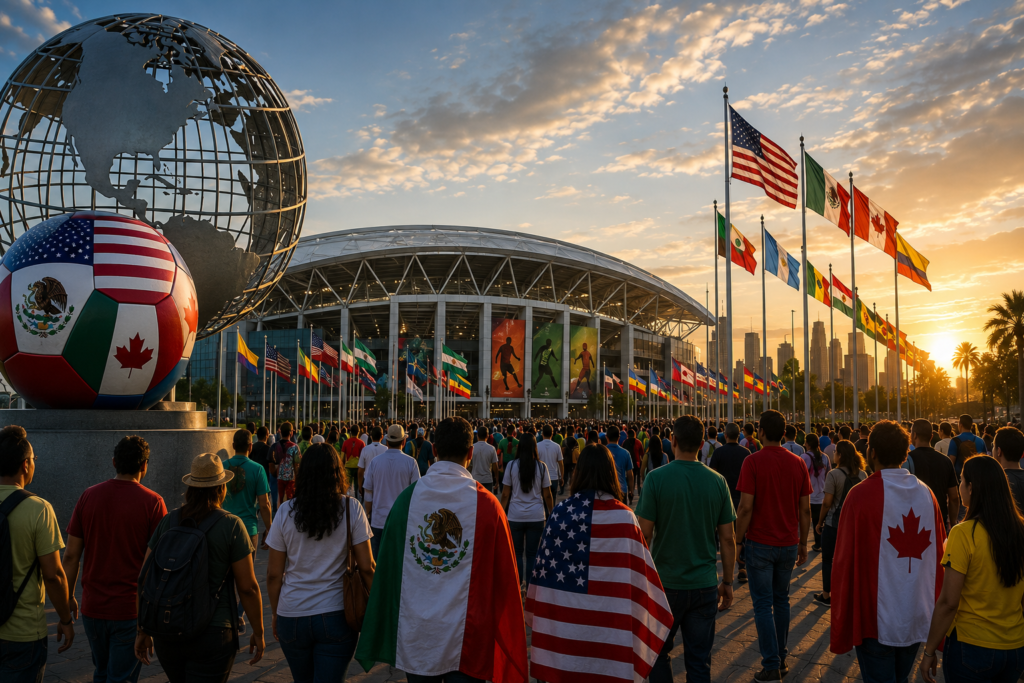
As the 2026 FIFA World Cup prepares to bring millions of fans, athletes, journalists and workers to North America, the United States is facing a question larger than soccer: can the country truly welcome the world while immigrant communities, travelers and civil rights advocates are raising alarms about fear, enforcement and unequal protection?
That question was at the center of an American Community Media national briefing titled “Is the U.S. Ready to Welcome the World? The 2026 FIFA World Cup and America’s Big Test.” The briefing brought together Minky Worden, Director of Global Initiatives at Human Rights Watch; Katherine La Puente, Children’s Rights Senior Coordinator at Human Rights Watch; Jamal R. Watkins, Senior Vice President of Strategy and Advancement at the NAACP; and Ariel G. Ruiz Soto, Senior Policy Analyst at the Migration Policy Institute.
The Largest World Cup Comes With the Biggest Questions
The 2026 FIFA World Cup will be the largest tournament in the sport’s history, with matches across the United States, Mexico and Canada. Eleven U.S. host cities, including Houston, Los Angeles, Miami, Seattle, Atlanta and the New York/New Jersey region, are preparing for massive crowds, heavy security, international media attention and major economic activity.
But the briefing made clear that the World Cup is not only a sports story. It is also an immigration story, a labor story, a civil rights story and a local community story.
Minky Worden of Human Rights Watch warned that the tournament cannot be separated from the current political climate. “There is no successful mega sporting event with a backdrop of human rights abuses as serious as the ones we’re discussing,” Worden said. “This World Cup is not a World Cup for the world.”
Immigration Enforcement and the Call for an ICE Truce
One of the biggest concerns raised during the briefing was whether immigrant families, mixed-status households and international visitors will feel safe attending World Cup events. Human Rights Watch has called for an “ICE truce” during the tournament, arguing that the U.S. should not use a global sporting event as a backdrop for aggressive immigration enforcement.
That issue has become even more urgent as immigrant rights organizations across host cities warn fans about possible risks. More than 120 civil society organizations have issued a travel advisory for the United States ahead of the World Cup, citing concerns over immigration enforcement, racial profiling, detention and civil liberties.
In the briefing chat, Worden described the Human Rights Watch analysis of more than 167,000 immigration arrests in and around U.S. host cities as “a terrible way to ‘welcome the world.’” That phrase captures the contradiction facing the country. The United States is inviting the world to celebrate, while many immigrant communities are asking whether that welcome applies to them.
Children and Families at Risk
Katherine La Puente, Children’s Rights Senior Coordinator at Human Rights Watch, focused on the human cost of enforcement policies, especially for children. She discussed concerns tied to family separation and the treatment of asylum-seeking families connected to soccer events.
“The World Cup needs to raise the bar for human rights and not lower it,” La Puente said.
Her message is especially important for Latino, immigrant and mixed-status families in cities like Houston, Los Angeles, Dallas, Miami and Atlanta. For many families, soccer is part of their culture and identity. But if parents fear detention, questioning or separation, the tournament can become a source of anxiety instead of celebration.
Civil Rights and Community Impact
Jamal R. Watkins of the NAACP placed the World Cup in a broader civil rights context. He said the event must protect not only fans and players, but also workers and local communities.
“We want to make sure that the experience for fans, players, community, and workers is at the highest level,” Watkins said. “The human rights issues as a backdrop undermine what the sport is about and what the World Cup is about.”
Watkins also raised a key economic question: who will benefit from the billions of dollars expected to move through host cities? “Money will flow from the games,” he said, “but it’ll flow into corporations and entities that are large in scope and not necessarily meet the community needs and investment needs of the hyperlocal communities that these games are taking place in.”
That issue matters in Houston and other host regions where working-class residents already face rising rent, food costs, transportation challenges and limited access to healthcare. If the World Cup brings profit without community investment, vulnerable neighborhoods may carry the burden while larger corporations collect the rewards.
Visas, Border Delays and Global Image
Ariel G. Ruiz Soto of the Migration Policy Institute offered a more measured view of the immigration landscape, while still recognizing the seriousness of visa and border concerns. Travelers from some countries are already watching how U.S. policies may affect entry, delays and access to games.
“The World Cup is the largest watched event across the world,” Ruiz Soto said. “The spotlight that would be placed on the administration if something like this were to happen would be largely negative internationally.”
That point connects directly to current concerns over visas, travel bans and border screening. If fans, journalists or team staff face delays or denials, the issue will not stay local. It will become an international story about whether the U.S. can host the world fairly.
What Ethnic and Community Media Should Watch
The briefing also highlighted the role of ethnic and community media. Mainstream outlets may focus on scores, stadiums and celebrities, but community journalists are more likely to cover workers, immigrant families, street vendors, unhoused residents, local businesses and neighborhoods affected by fan zones, policing and rising costs.
For Houston’s Latino and immigrant communities, the 2026 FIFA World Cup is both an opportunity and a warning. It can bring visibility, business and cultural pride. But it can also bring over-policing, exploitation, displacement and fear if leaders fail to protect those most at risk.
America’s Big Test
The 2026 FIFA World Cup will show the world more than soccer. It will show how the United States treats visitors, workers, immigrants, children, journalists and local communities under global pressure.
If America wants to welcome the world, the welcome must reach beyond stadium gates. It must include safe travel, fair labor standards, civil rights protections, language access, press freedom and respect for immigrant families.
The games will be watched by billions. The bigger question is whether the country will meet the moment with hospitality, fairness and human dignity.
¿Está Estados Unidos listo para recibir al mundo? La Copa Mundial FIFA 2026 pone a prueba la política migratoria, los derechos civiles y los derechos humanos del país
Mientras la Copa Mundial FIFA 2026 se prepara para traer a millones de aficionados, atletas, periodistas y trabajadores a Norteamérica, Estados Unidos enfrenta una pregunta que va más allá del fútbol: ¿puede el país realmente recibir al mundo mientras comunidades inmigrantes, viajeros y defensores de derechos civiles expresan preocupación por el miedo, la vigilancia y la falta de protección equitativa?
Esa pregunta fue el centro de una conferencia nacional de American Community Media titulada “¿Está Estados Unidos listo para recibir al mundo? La Copa Mundial FIFA 2026 y la gran prueba de Estados Unidos”. La sesión reunió a Minky Worden, directora de Iniciativas Globales de Human Rights Watch; Katherine La Puente, coordinadora sénior de derechos de la niñez de Human Rights Watch; Jamal R. Watkins, vicepresidente sénior de Estrategia y Avance de la NAACP; y Ariel G. Ruiz Soto, analista sénior de políticas del Migration Policy Institute.
La Copa Mundial más grande llega con grandes preguntas
La Copa Mundial FIFA 2026 será el torneo más grande en la historia del deporte, con partidos en Estados Unidos, México y Canadá. Once ciudades anfitrionas en Estados Unidos, incluyendo Houston, Los Ángeles, Miami, Seattle, Atlanta y la región de Nueva York/Nueva Jersey, se preparan para multitudes masivas, mayor seguridad, atención internacional y una gran actividad económica.
Pero la conferencia dejó claro que la Copa Mundial no es solo una historia deportiva. También es una historia migratoria, laboral, de derechos civiles y de impacto comunitario.
Minky Worden, de Human Rights Watch, advirtió que el torneo no puede separarse del clima político actual. “There is no successful mega sporting event with a backdrop of human rights abuses as serious as the ones we’re discussing,” dijo Worden. “This World Cup is not a World Cup for the world.”
Control migratorio y el llamado a una tregua de ICE
Una de las mayores preocupaciones planteadas durante la conferencia fue si las familias inmigrantes, los hogares de estatus migratorio mixto y los visitantes internacionales se sentirán seguros asistiendo a eventos de la Copa Mundial. Human Rights Watch ha pedido una “tregua de ICE” durante el torneo, argumentando que Estados Unidos no debe usar un evento deportivo global como escenario para una aplicación agresiva de leyes migratorias.
Ese tema se ha vuelto aún más urgente mientras organizaciones de derechos de inmigrantes en ciudades anfitrionas advierten a los aficionados sobre posibles riesgos. Más de 120 organizaciones de la sociedad civil han emitido una alerta de viaje para Estados Unidos antes de la Copa Mundial, citando preocupaciones sobre control migratorio, perfilamiento racial, detenciones y libertades civiles.
En el chat de la conferencia, Worden describió el análisis de Human Rights Watch sobre más de 167,000 arrestos migratorios en y alrededor de ciudades anfitrionas de Estados Unidos como “a terrible way to ‘welcome the world.’” Esa frase captura la contradicción que enfrenta el país. Estados Unidos está invitando al mundo a celebrar, mientras muchas comunidades inmigrantes se preguntan si esa bienvenida también las incluye.
Niños y familias en riesgo
Katherine La Puente, coordinadora sénior de derechos de la niñez de Human Rights Watch, se enfocó en el costo humano de las políticas de control migratorio, especialmente para los niños. La Puente habló sobre preocupaciones relacionadas con la separación familiar y el trato a familias solicitantes de asilo vinculadas a eventos de fútbol.
“The World Cup needs to raise the bar for human rights and not lower it,” dijo La Puente.
Su mensaje es especialmente importante para familias latinas, inmigrantes y de estatus mixto en ciudades como Houston, Los Ángeles, Dallas, Miami y Atlanta. Para muchas familias, el fútbol es parte de su cultura e identidad. Pero si los padres temen ser detenidos, interrogados o separados de sus hijos, el torneo puede convertirse en una fuente de ansiedad en lugar de celebración.
Derechos civiles e impacto comunitario
Jamal R. Watkins, de la NAACP, colocó la Copa Mundial dentro de un contexto más amplio de derechos civiles. Dijo que el evento debe proteger no solo a los aficionados y jugadores, sino también a los trabajadores y las comunidades locales.
“We want to make sure that the experience for fans, players, community, and workers is at the highest level,” dijo Watkins. “The human rights issues as a backdrop undermine what the sport is about and what the World Cup is about.”
Watkins también planteó una pregunta económica clave: ¿quién se beneficiará de los miles de millones de dólares que se espera circulen por las ciudades anfitrionas? “Money will flow from the games,” dijo, “but it’ll flow into corporations and entities that are large in scope and not necessarily meet the community needs and investment needs of the hyperlocal communities that these games are taking place in.”
Ese tema importa en Houston y otras regiones anfitrionas donde residentes de clase trabajadora ya enfrentan aumentos en renta, costos de comida, problemas de transporte y acceso limitado a servicios de salud. Si la Copa Mundial trae ganancias sin inversión comunitaria, los vecindarios vulnerables podrían cargar con el peso mientras grandes corporaciones reciben los beneficios.
Visas, demoras fronterizas e imagen global
Ariel G. Ruiz Soto, del Migration Policy Institute, ofreció una mirada más medida sobre el panorama migratorio, aunque reconoció la seriedad de las preocupaciones sobre visas y fronteras. Viajeros de algunos países ya están observando cómo las políticas estadounidenses podrían afectar la entrada, las demoras y el acceso a los partidos.
“The World Cup is the largest watched event across the world,” dijo Ruiz Soto. “The spotlight that would be placed on the administration if something like this were to happen would be largely negative internationally.”
Ese punto se conecta directamente con preocupaciones actuales sobre visas, prohibiciones de viaje y controles fronterizos. Si aficionados, periodistas o personal de equipos enfrentan retrasos o negaciones, el problema no se quedará en lo local. Se convertirá en una historia internacional sobre si Estados Unidos puede recibir al mundo de manera justa.
Lo que deben observar los medios étnicos y comunitarios
La conferencia también destacó el papel de los medios étnicos y comunitarios. Los medios nacionales pueden enfocarse en marcadores, estadios y celebridades, pero los periodistas comunitarios tienen más probabilidades de cubrir a trabajadores, familias inmigrantes, vendedores ambulantes, personas sin hogar, pequeños negocios y vecindarios afectados por zonas de aficionados, vigilancia policial y aumento de costos.
Para las comunidades latinas e inmigrantes de Houston, la Copa Mundial FIFA 2026 es una oportunidad y una advertencia. Puede traer visibilidad, negocios y orgullo cultural. Pero también puede traer sobre vigilancia, explotación, desplazamiento y miedo si los líderes no protegen a quienes corren mayor riesgo.
La gran prueba de Estados Unidos
La Copa Mundial FIFA 2026 le mostrará al mundo algo más que fútbol. Mostrará cómo Estados Unidos trata a visitantes, trabajadores, inmigrantes, niños, periodistas y comunidades locales bajo presión global.
Si Estados Unidos quiere recibir al mundo, esa bienvenida debe ir más allá de las puertas de los estadios. Debe incluir viajes seguros, estándares laborales justos, protección de derechos civiles, acceso a idiomas, libertad de prensa y respeto por las familias inmigrantes.
Los partidos serán vistos por miles de millones de personas. La pregunta más grande es si el país estará a la altura del momento con hospitalidad, justicia y dignidad humana.
About The Author

More Stories
Houston Text Fest 2026: A Community’s Stories Come Together (Photo Gallery)
Three Days at TEXAS TRIBUNE TribFest 2026: Covering the Questions Shaping Texas (w/ Photo Gallery)
Texas Midterm Elections 2026 What Voters and Journalists Need to Know